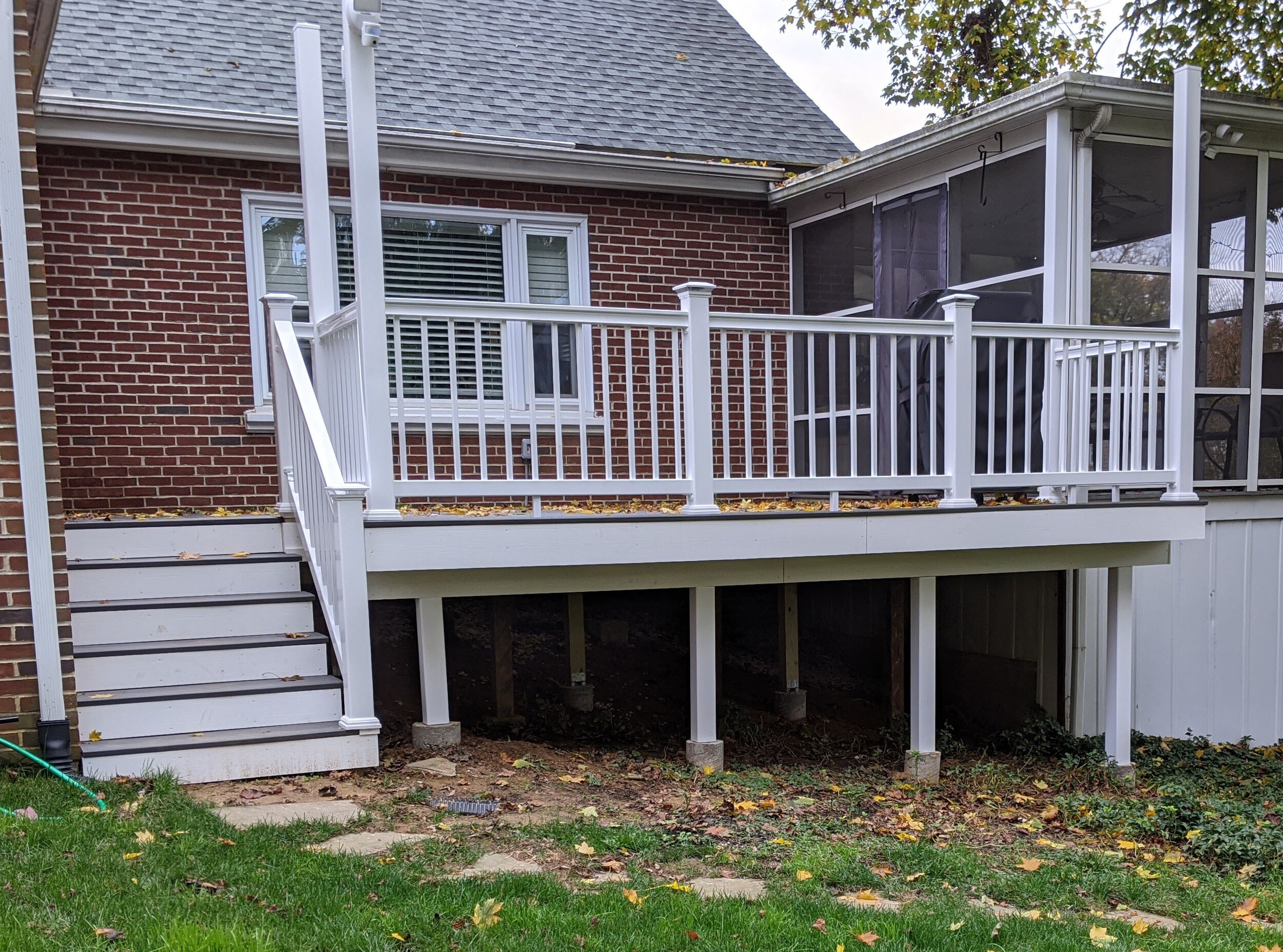
UPGRADING THAT OLD, YUCKY DECK: Expansion of Old Frame and Grading the Ground

upgrading-your-deck-framinggrading-hor.jpg

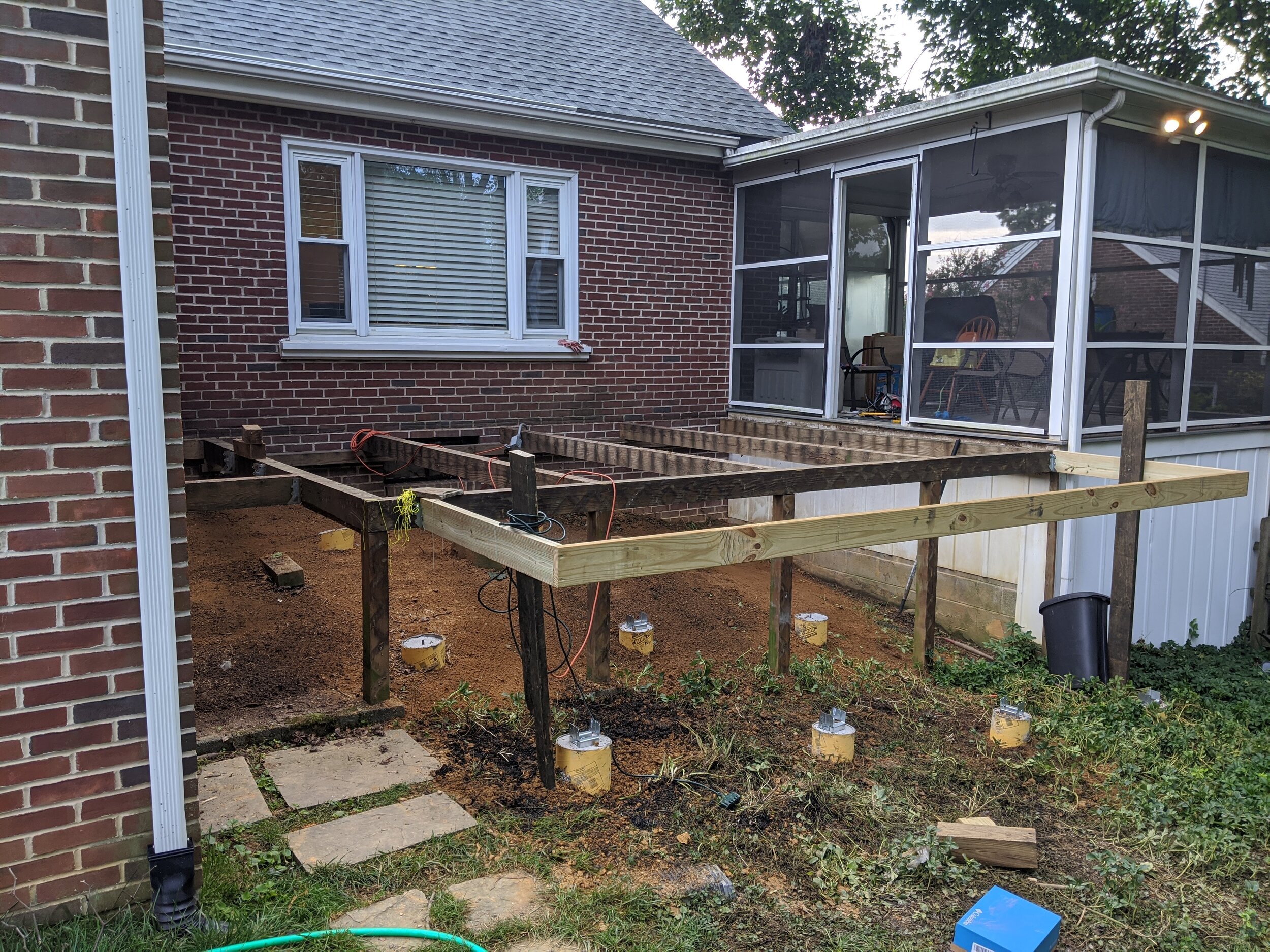
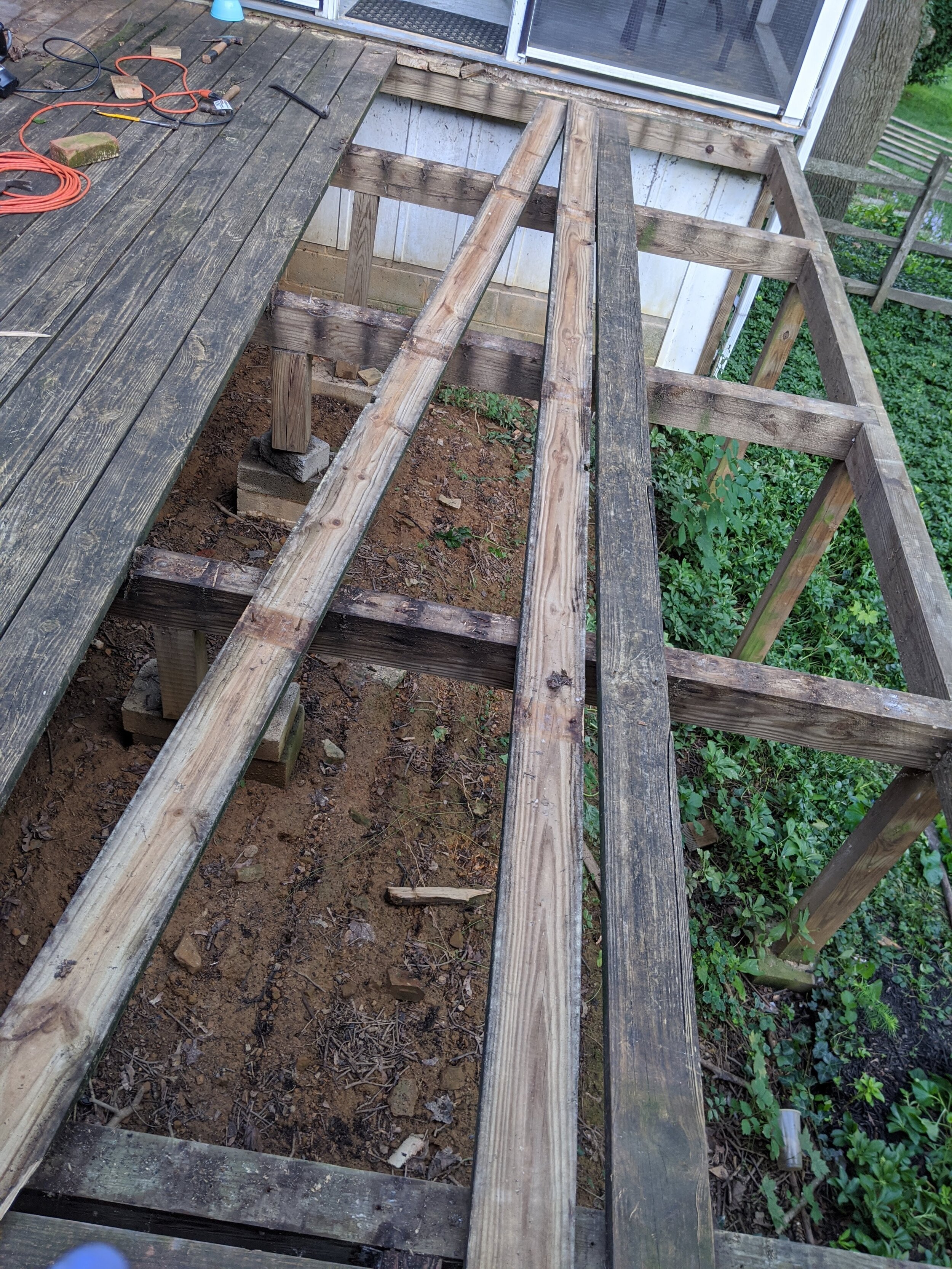
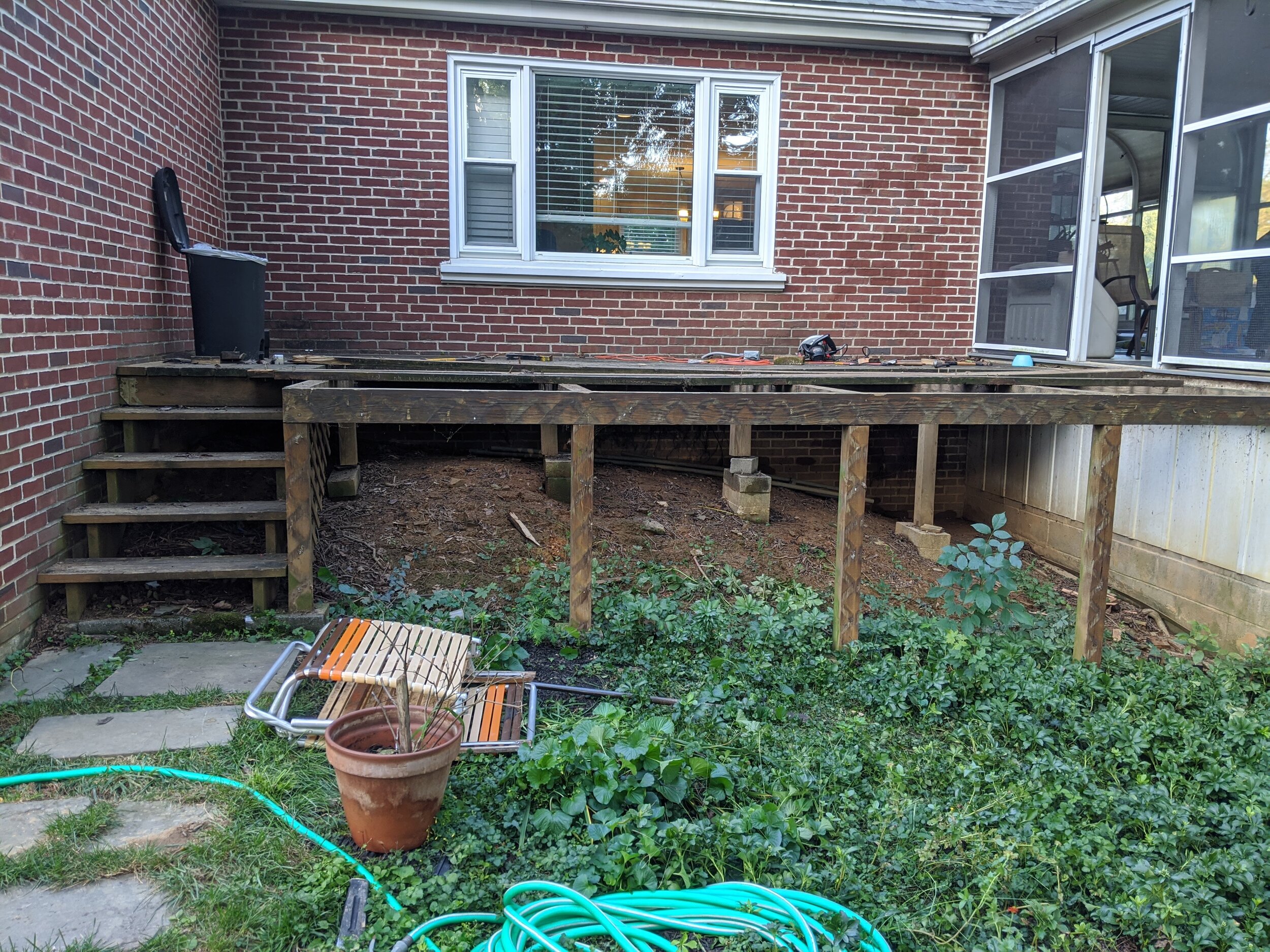
Our deck was transitioning from 12’ x 20’ to 16’ x 20’, and we were able to keep some of the frame. But we needed to add a new section out into the yard, bringing the deck 4’ past our sunroom and even with the house. This mean a little new framing. This was also the stage we carried load after load of stones, and Hubs has just informed me (two months later) that there are still more loads to be carried. EW.

EXPANDING THE FRAME

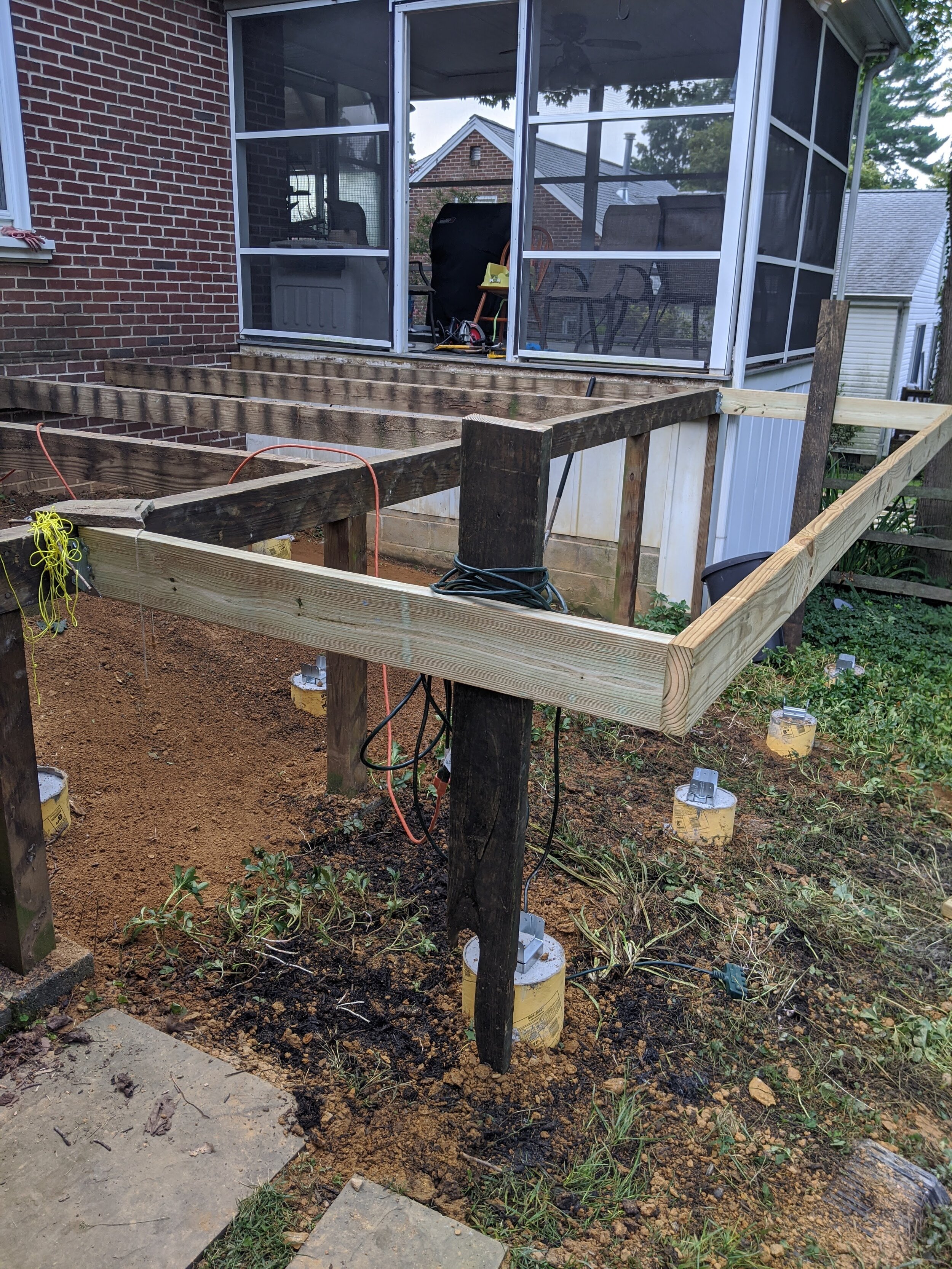
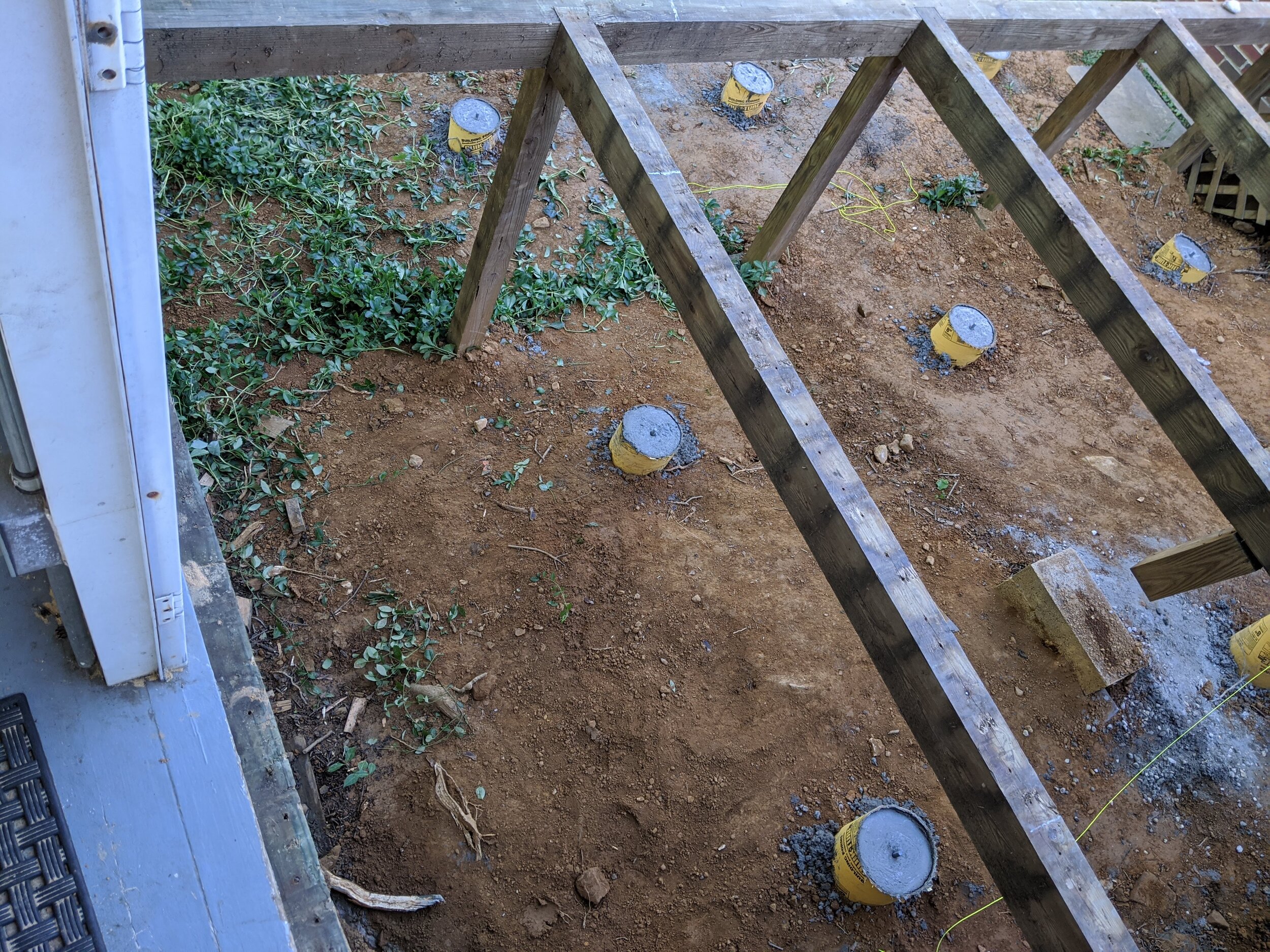
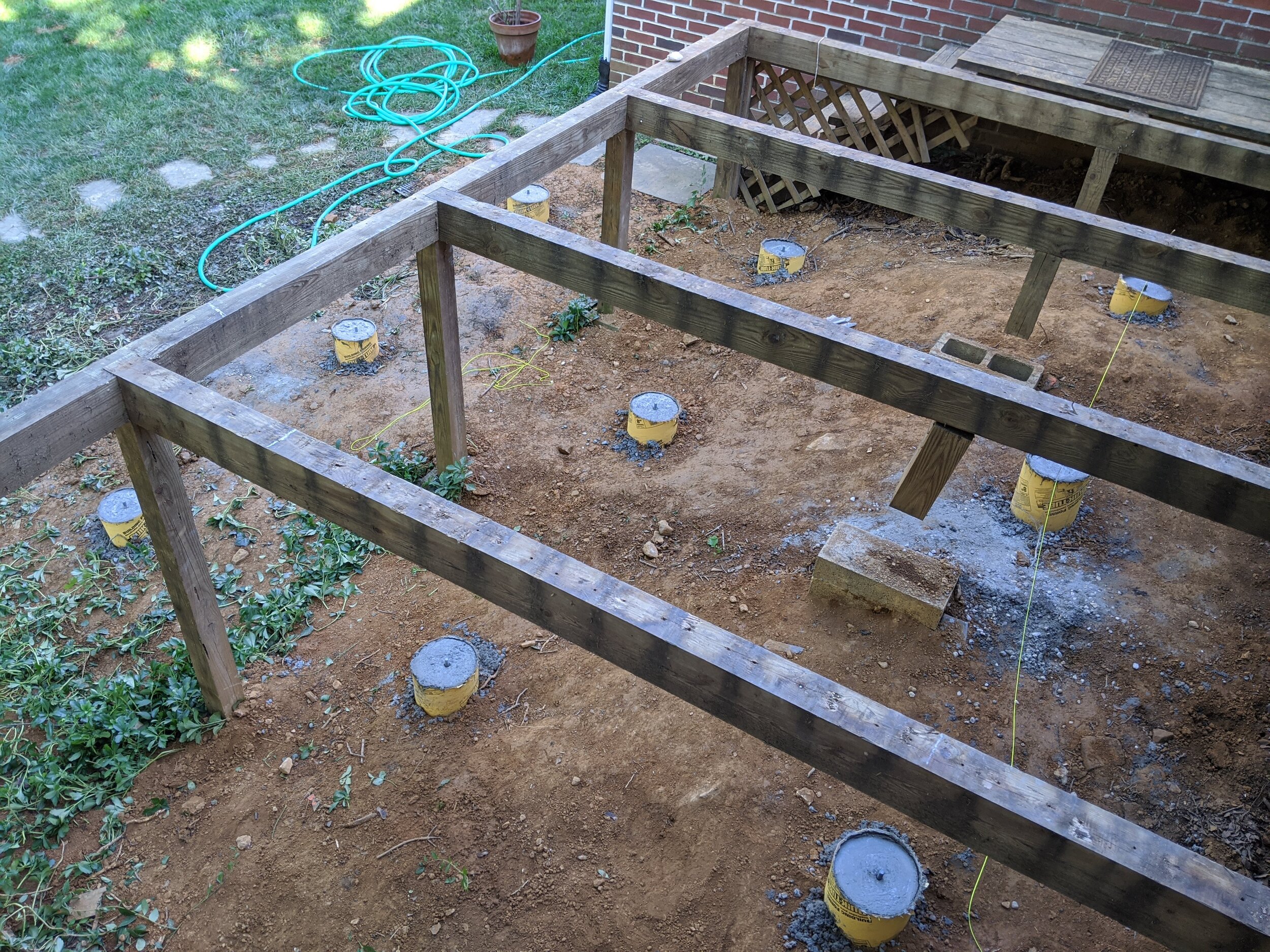
Using 2 x 6s, we expanded the frame with some temporary supports until we could get the footers underneath. Obviously, if you were building a deck from ‘scratch,’ you’d never put the supports UNDER the frame -- you’d build from the ground up. But in our case, we were keeping some of the old skeleton, so this is the way it worked out.
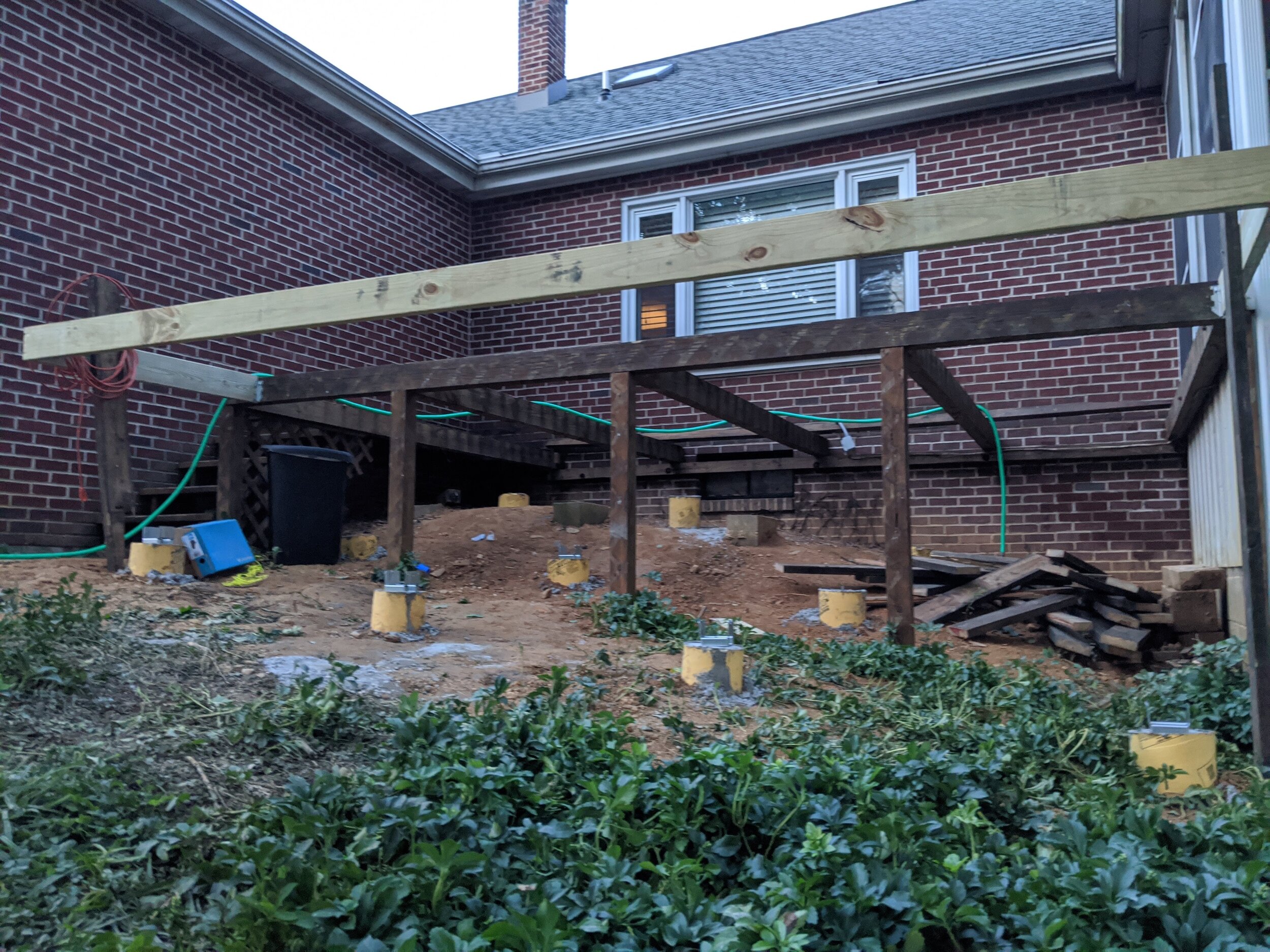
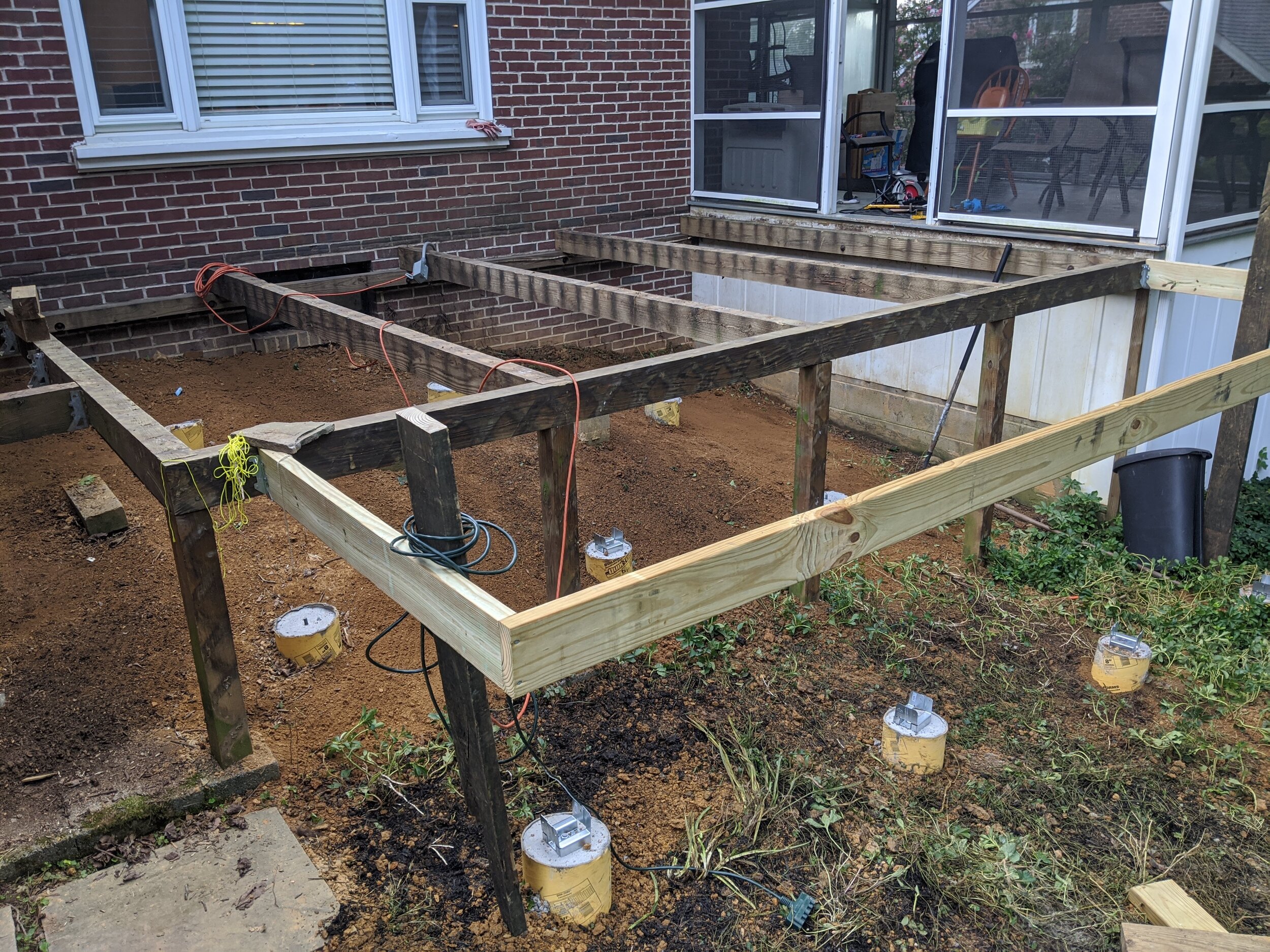
You can see how much smoother the ground is here, especially around the footers. We did a fair amount of re-grading to ensure no water was pooling against the side of the house foundation. (My poor pachysandra was much tromped-on during this reno but it’s a resilient plant!)

The stone is important because it will allow rainwater to run down and away from the house.

 
PXL_20201024_155154536.jpg
 

Hubs’ goal is to have all the dirt covered before winter, like a squirrel. Ok, that probably isn’t what squirrels think. But he wants more stones. More stones!

Our next step was all these trusses and supports, so keep reading…

 
upgrading-your-deck-framinggrading-vert.jpg


Click Here to View the Full Blog Archive.      


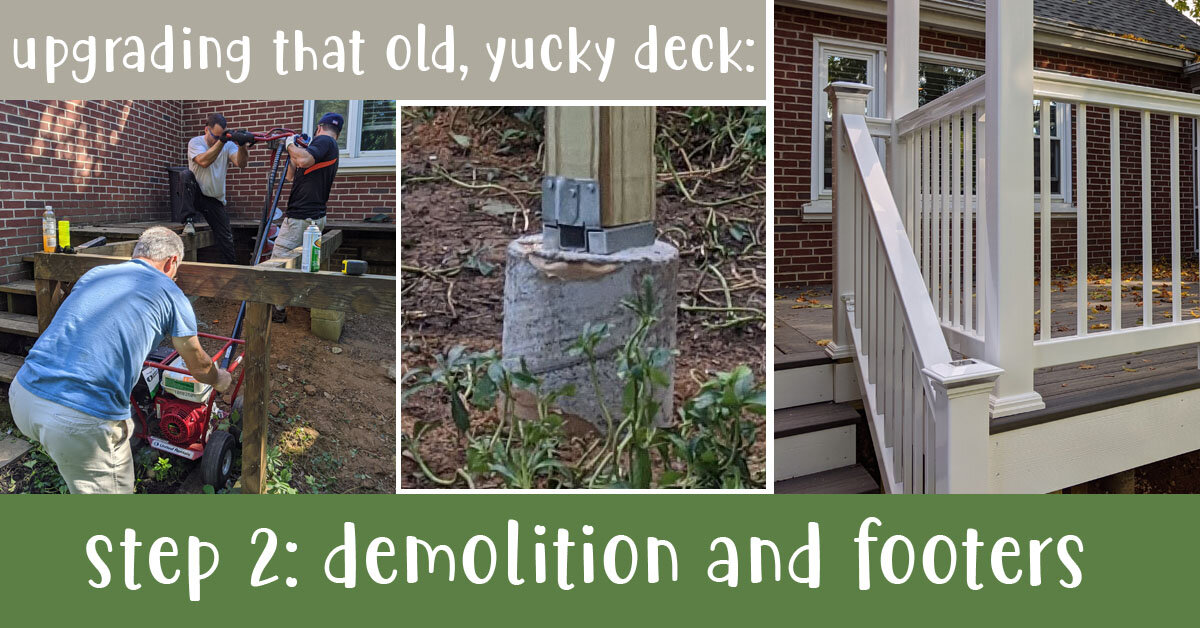
upgrading that old, yucky deck: demolition and footers

upgrading-your-deck-demofoot-hor.jpg

DEMOLITION

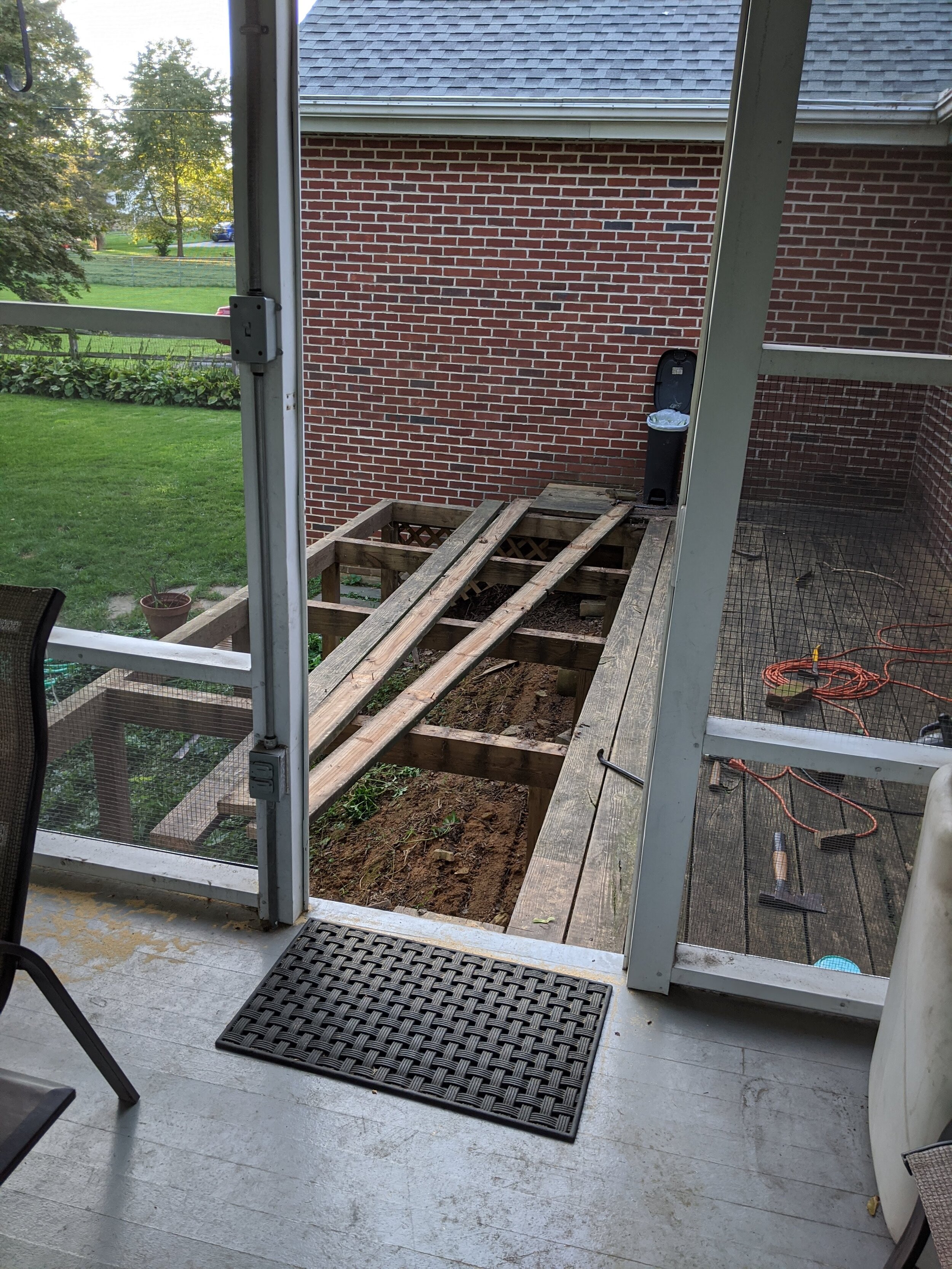
If you don’t have a deck already, then you get to skip demolition — unless maybe you have a tree stump or old car port you’re removing. Our demolition involved cutting out a (HEAVY) large (HEAVY) built-in (HEAVY) bench, then removing the front lattice, deck boards and stairs.

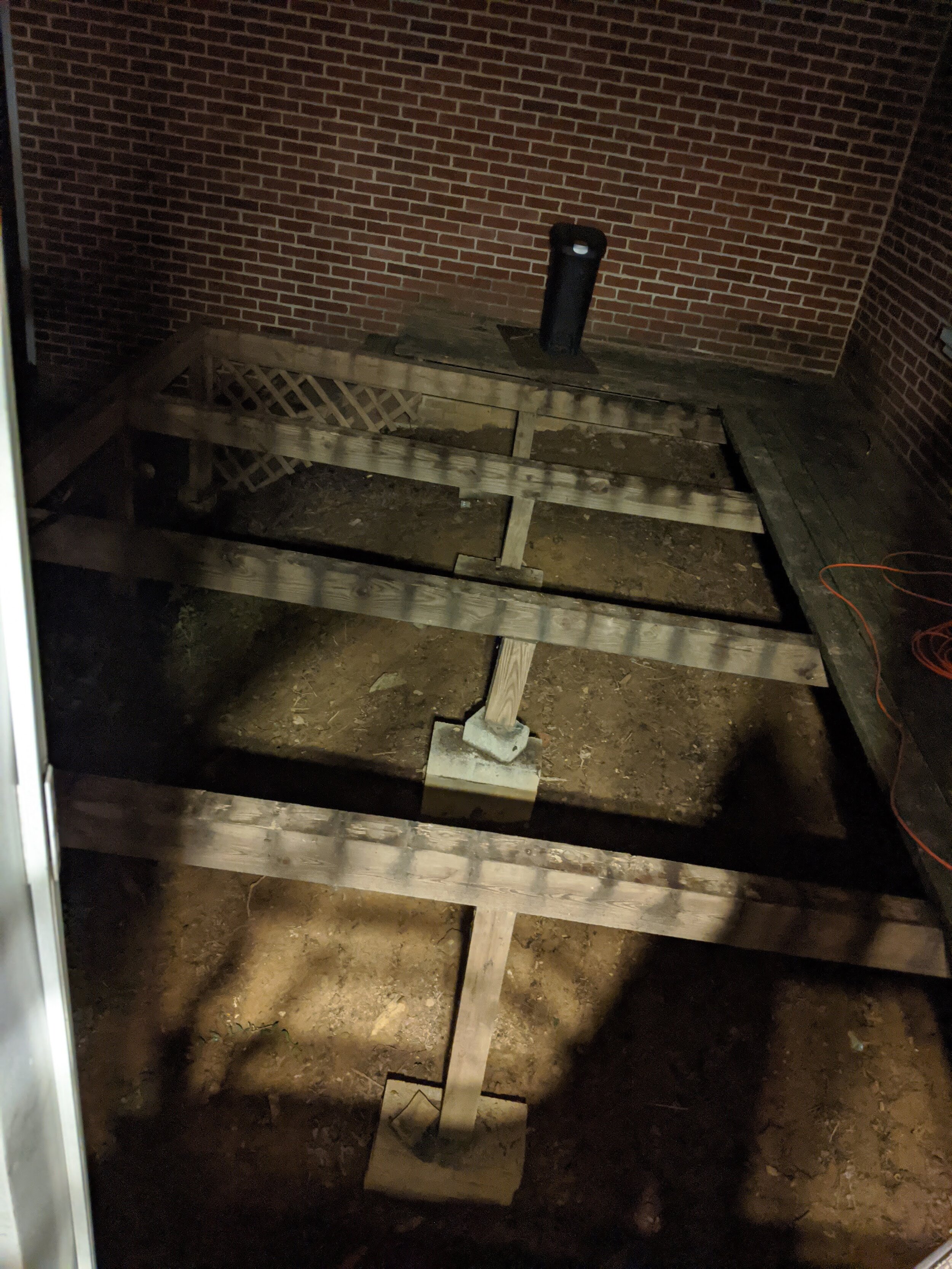
The far right picture above is where you can see the ridiculous support system that was hiding under this deck. It’s like an old shoe box stacked on a rotten board with two pieces of chewed gum to straighten it out. (Ok, it wasn’t that bad, but knowing I’d had everyone I love on that deck, I was very irritated.)

As we started to pull up the boards, my sons were impressed to see Daddy had hoed perfect rows underneath in the dirt — little did they know, it was just years of dirty water dripping between the boards. (I’m going to cover the ground prep in another blog but since you can see it here, I wanted to point it out.)

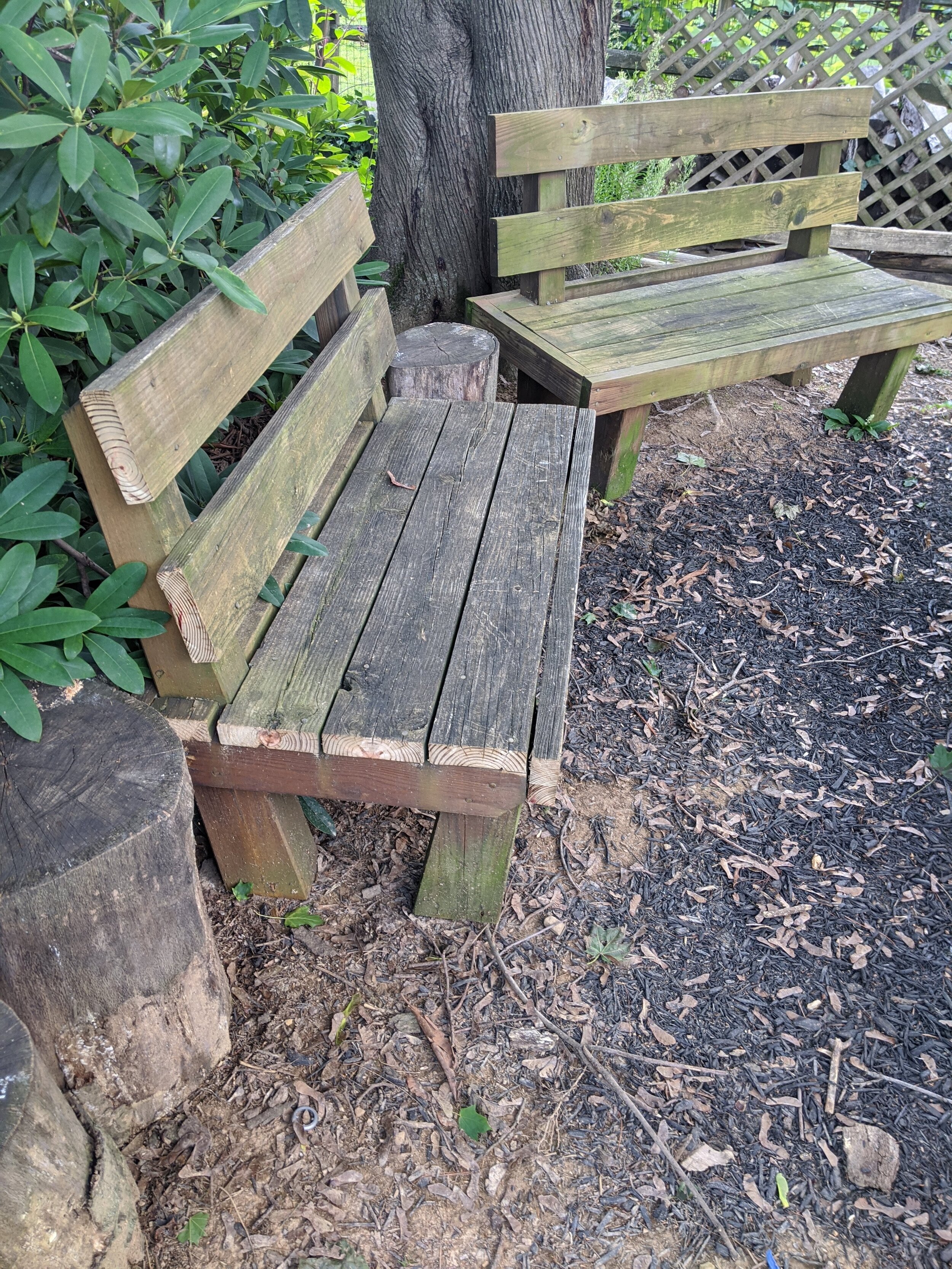
In our case, the first step was cutting out the (did I mention HEAVY?) benches that served primarily as the railings on our deck. Once again, I forgot to take a picture before BUT you can see we (with great struggle) carried them across the yard to use as sturdy seating around our firepit. We just used a sawzall to cut through on either side of the foot supports — so we threw away a small middle section of each that ended up with no feet.


DIGGING THE FOOTERS

As you saw on my extremely accurate and color-coded plan, we needed to dig 10 footers. This would eliminate the brick anchors into our house being forced to carry the weight of the deck and instead send it into the ground.

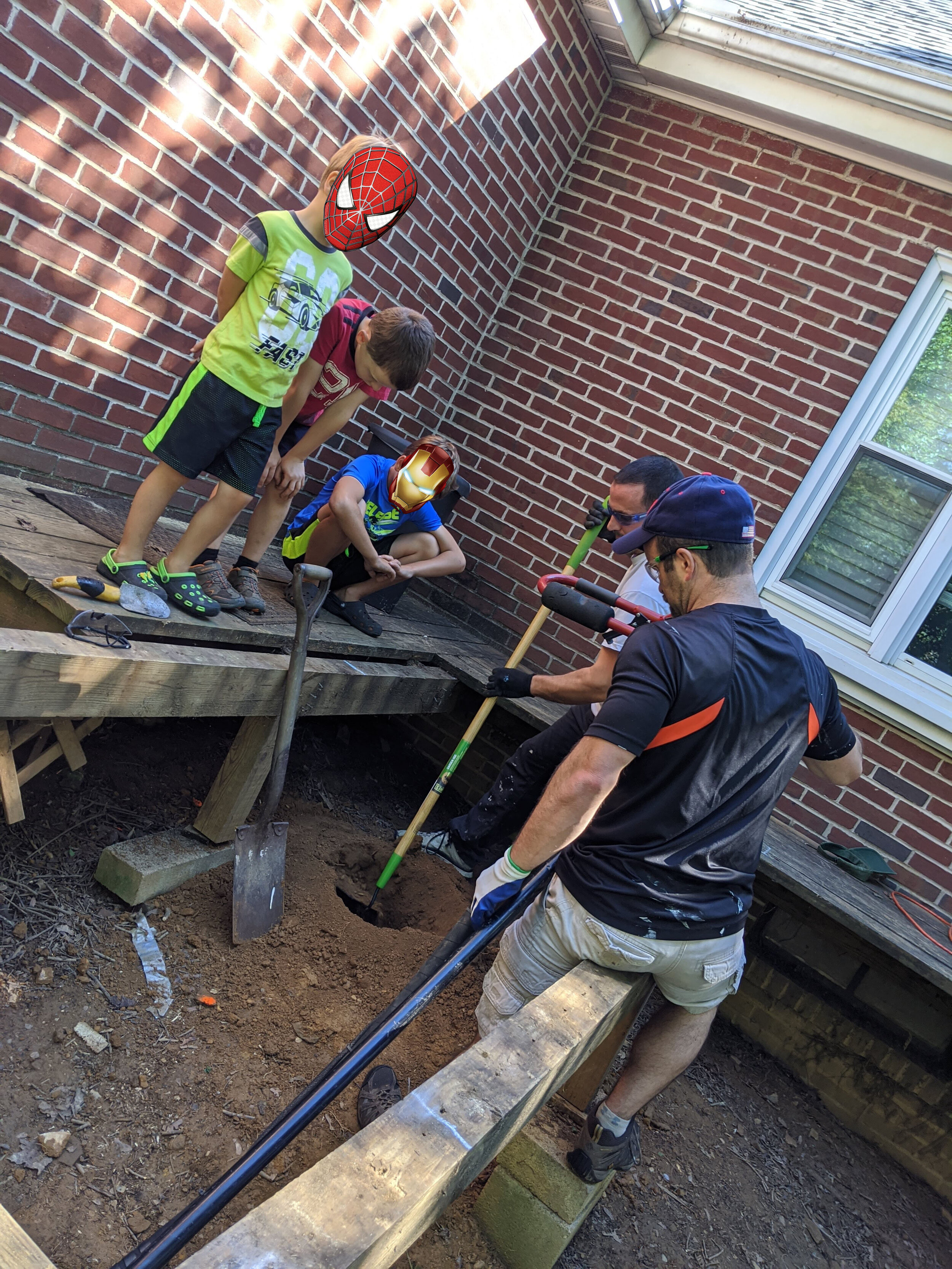
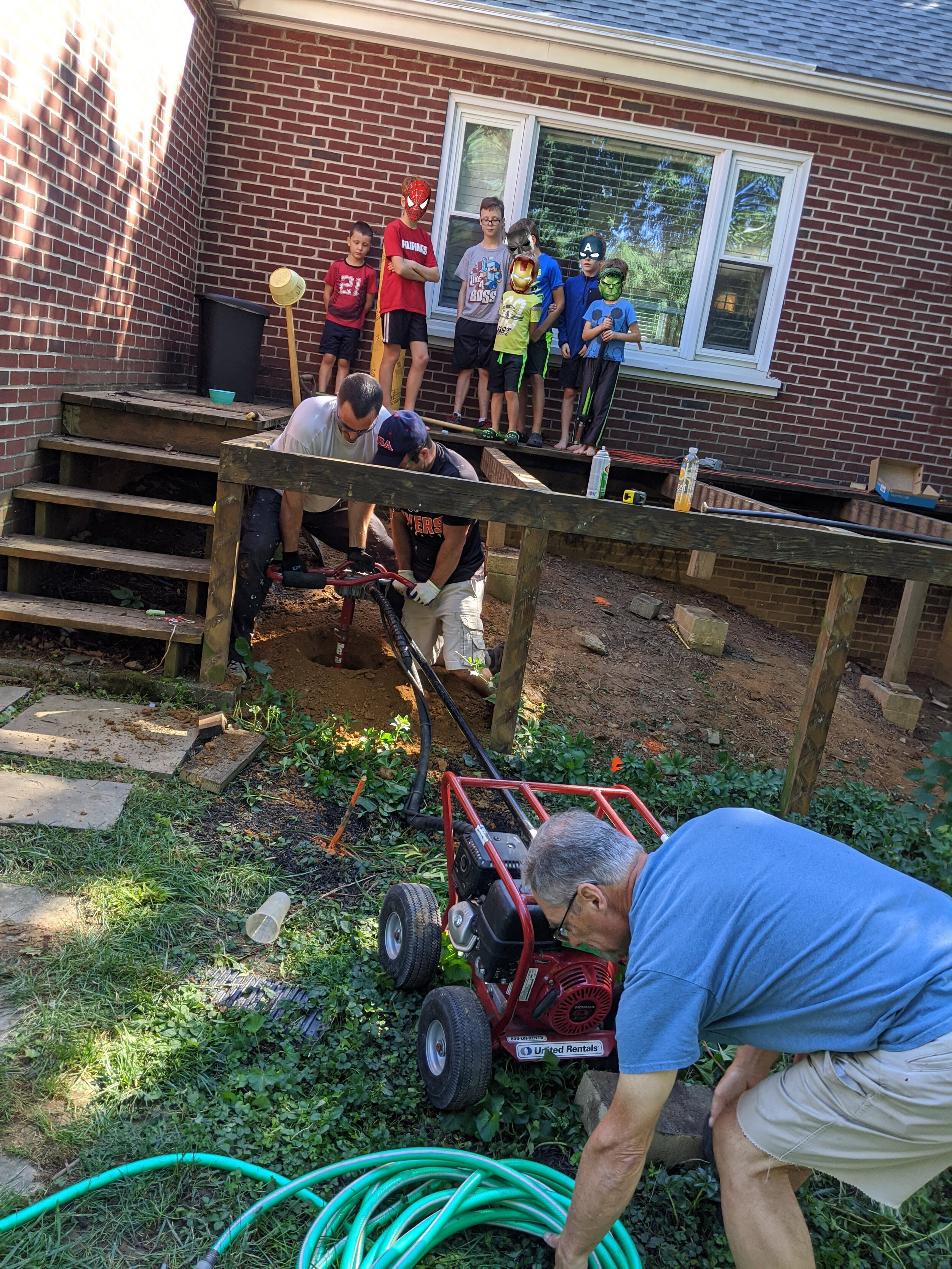
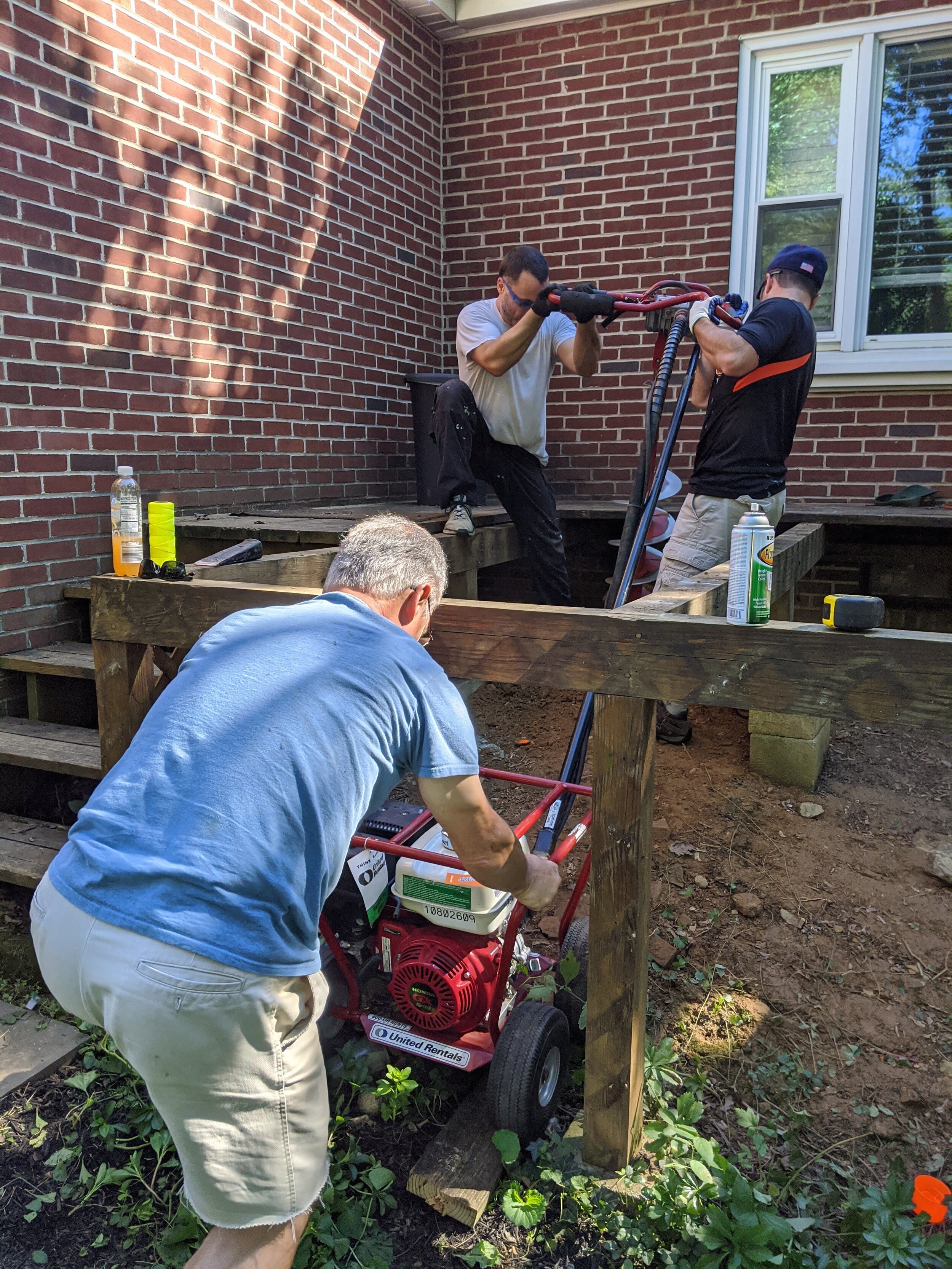
First step was to rent a huge digger auger. My sons literally sent out an APB into the neighborhood “MY DAD IS DIGGING HOLES” and allllll the neighborhood children showed up to watch. It was SO much fun!

We had some really great help at this stage which was much appreciated. And afterwards, Hubs got to dig a few holes that neighbors needed for other projects while we still had the auger.

A WORD ABOUT MEASURING

You aren’t going to be able to move the concrete, so get this right. Your support beams must go in a straight line. Measure the holes twice before you start and again as you’re going. The auger isn’t exact, but these footers are holding up the support beams — which you aren’t going to be able to just bend a little if you’re a half-inch off! Hang a string and make sure it’s perfect both vertically and horizontally using a level! You need the screws to be perfect, so if the tubes are off a bit that’s ok. Just line up the screws with your string.

Our vertical supports are ten 4 x 4s, so we dug two to three feet down for each 8-inch diameter concrete tube. We used 2-3 pieces of re-bar in each and left 6-12” of the tube above ground level. After the concrete settled for just a few minutes, we pushed in the screws to attach the hardware.

(Astute viewers will notice we did leave some of the old vertical supports, which aren’t weightbearing anymore, but it would have been unnecessary work to remove them.)

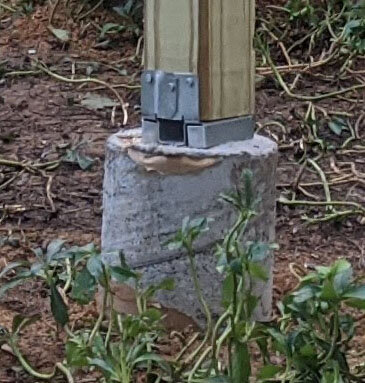
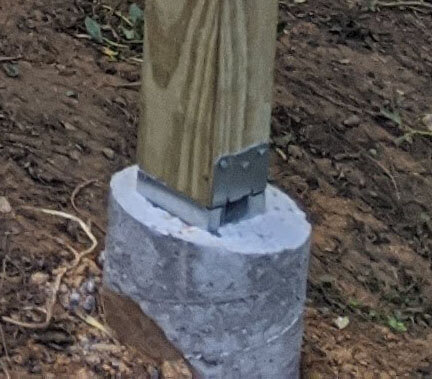
After everything is dried, you attach the hardware with a giant nut, then you can peel away the exposed part of the tube.

Here’s what the bottom of the footers look like at various stages:

Our next step was expanding the frame and grading the ground, so keep reading…

 
upgrading-your-deck-demofoot-vert.jpg


Click Here to View the Full Blog Archive.      


upgrading that old, yucky deck: Make a killer, to-scale, color-coded plan for your deck

(that impresses the guy at Home Depot)

upgrading-your-deck2-hor.jpg

I will say that I love Home Depot, and I’m not mocking them. But usually I’m in there with a kid or two, and I end up looking like I need a lot of help. But on the day I walked in with my graph paper, color coded, accurately scaled diagram of our new deck… I was impressive.

It was a good feeling.

Our besties have been slowly working our way through some at-home-Escape-Room style games like Hunt-a-Killer and one of the recent ones (Earthbreak) included a cool graph paper FIELD GUIDE. The thing is, the notebook itself wasn’t really needed for the game — just some clues on the covers. But I saved the book, and boy did it come in handy.

From the first conversation Hubs and I had (15 days before our event) to the actual ‘set this in concrete’, we did six drawings over two days. This is critical because Hubs and I have different style brains and can never understand something three-dimensional that the other is describing without a picture.

It was also necessary to estimate our costs on lumber, decking, concrete, hardware, and railings.

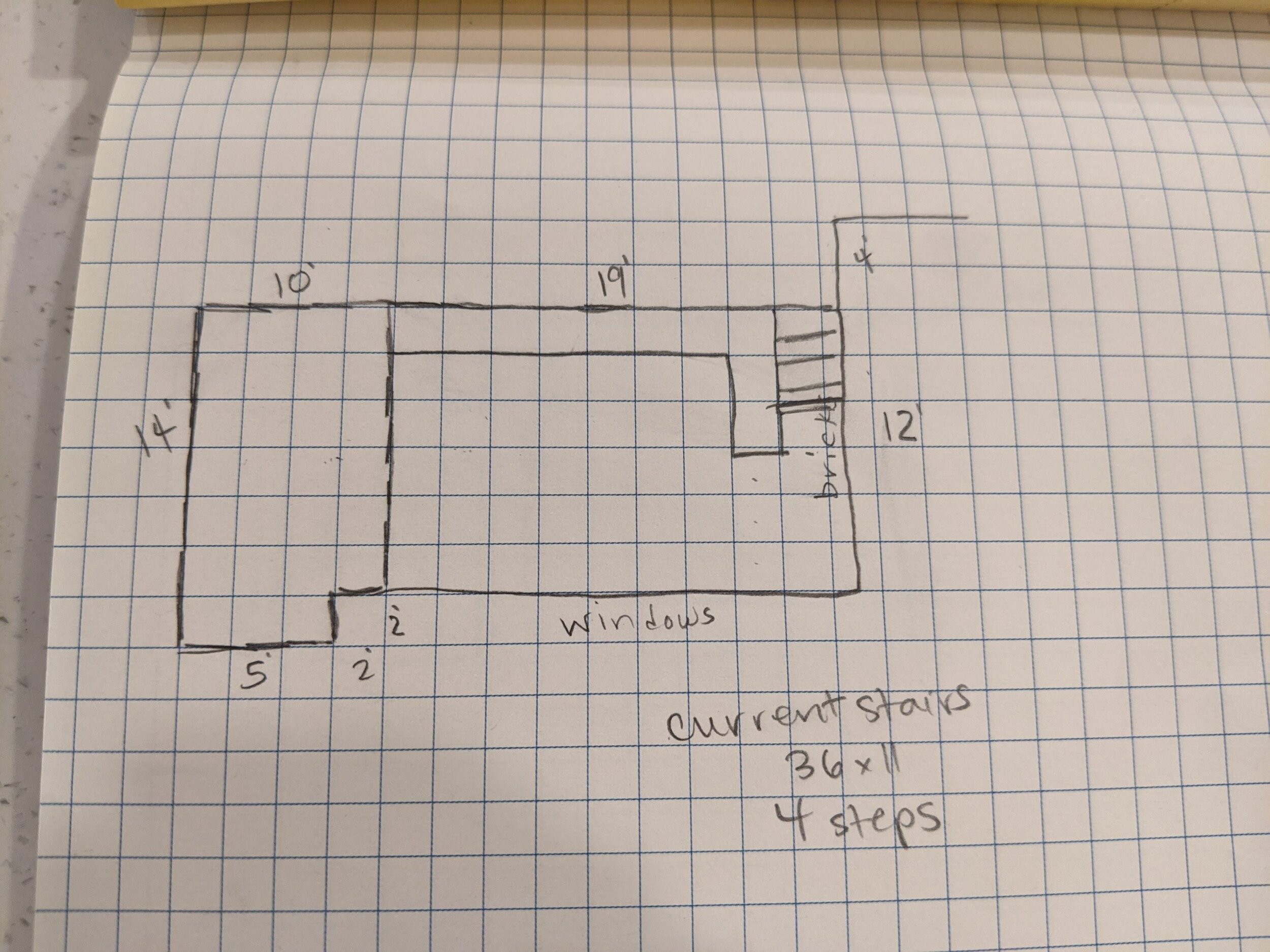
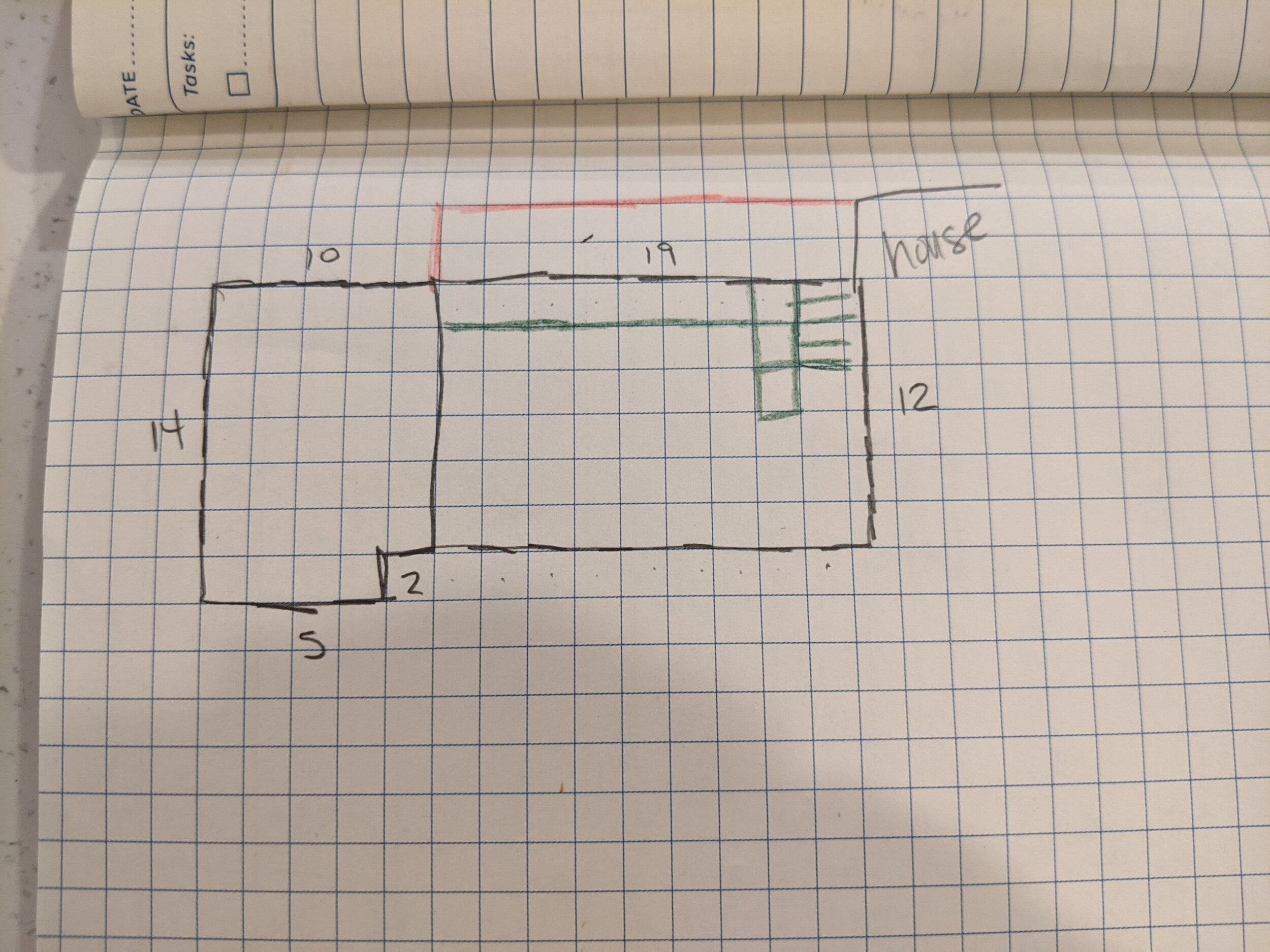
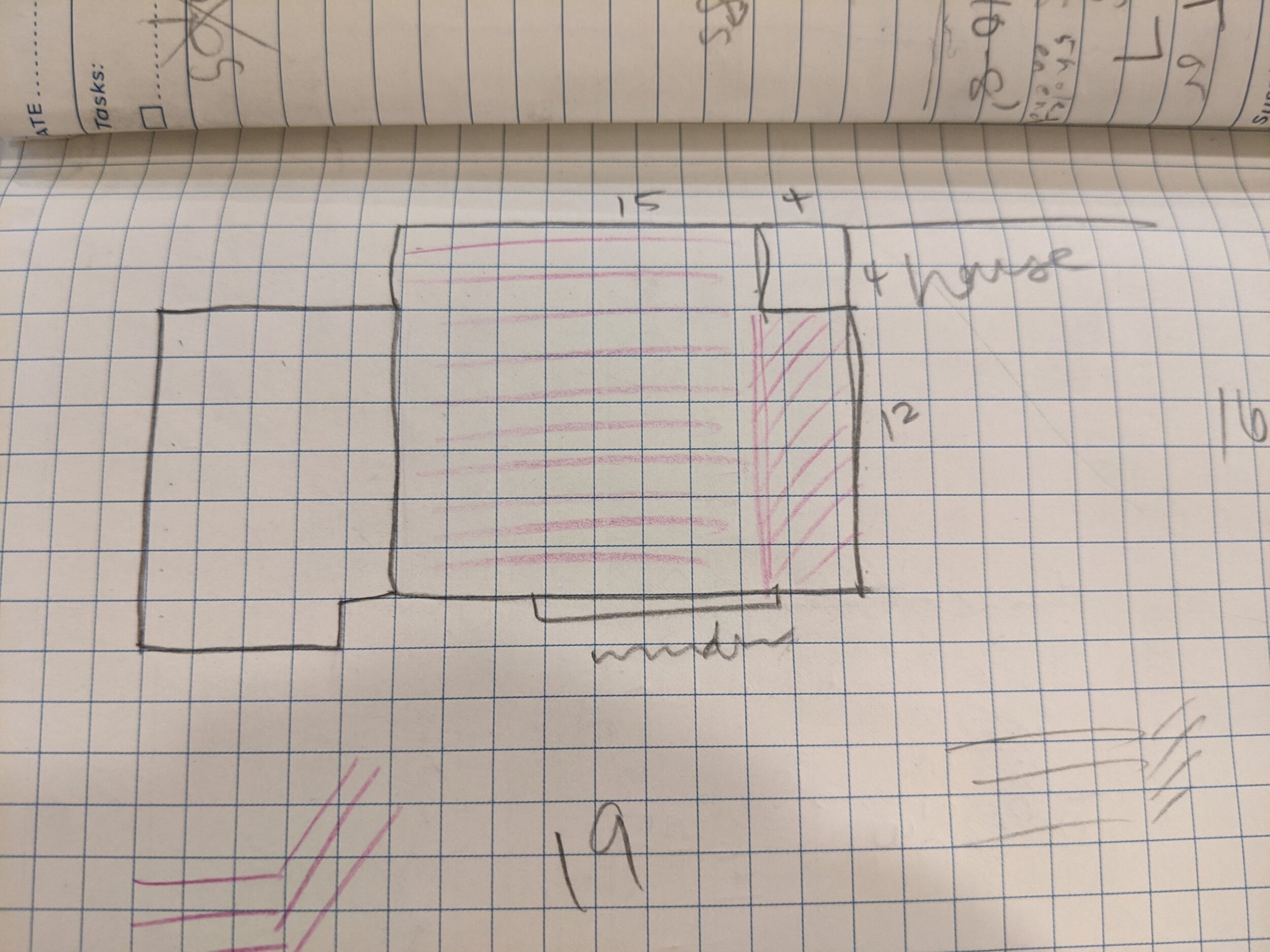
The final plan was a 1 square = 1 foot scale view from above. Our old, yucky deck was 12’ x 16’ feet, and now we expanded to 16’ x 16’. It’s not a huge gain but because there’s not a built-in bench that blocks us from pushing the grill into the corner, the arrangement is better and the result is a much larger-feeling space.

Here are a few versions of our plan:

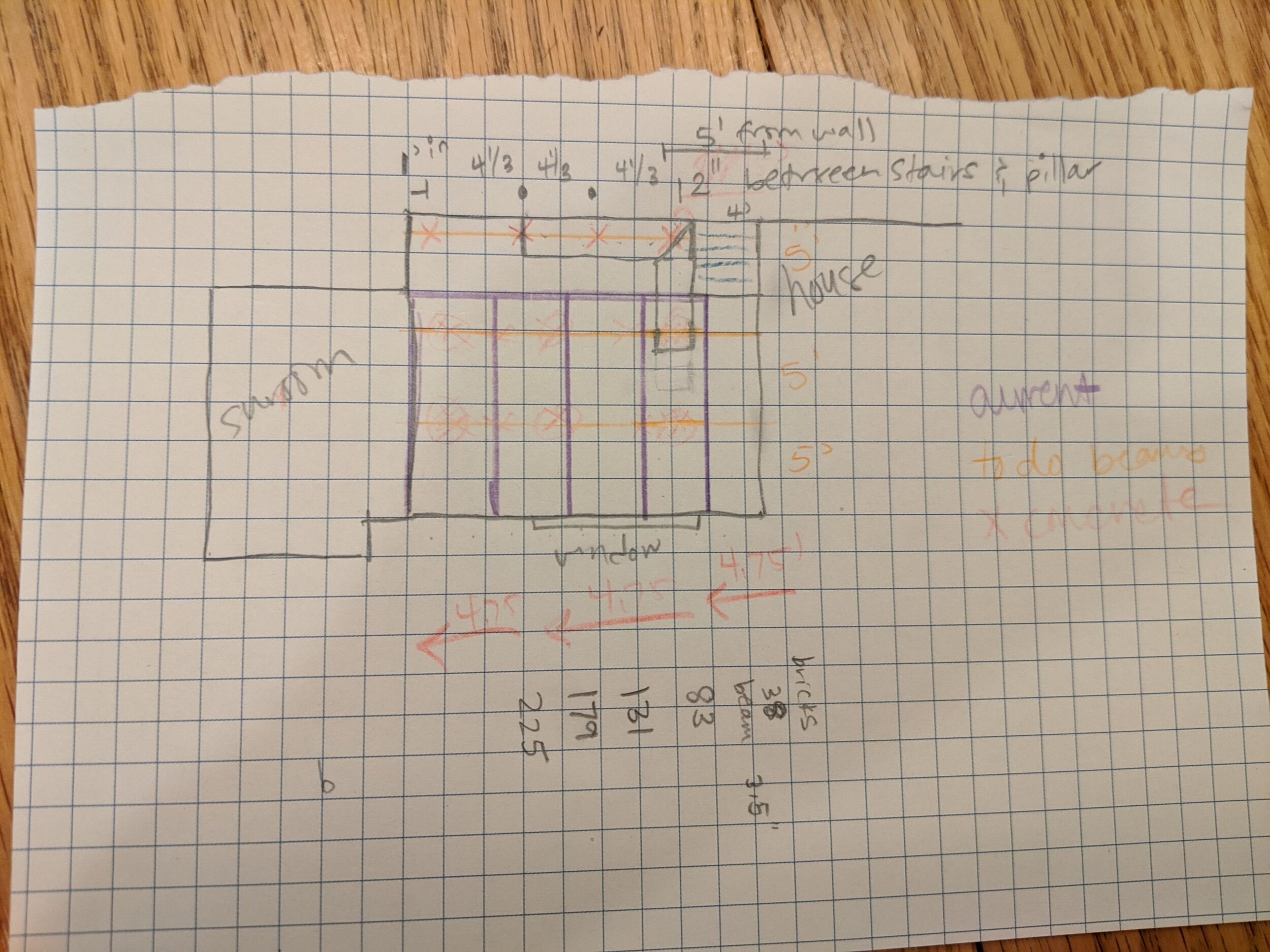
Below is the final plan we ended up using for everything. Please note all the dirty fingerprints — I’m so proud of them. They are proof that this was a document we used every step of the way.

Colors represent:

  • Purple: the original deck framing that we kept

  • Orange: new 2 x 8 beams (you’ll see when we laid them, the long ones are doubled/sandwhiched to be 4 x 8)

  • Blue: new 2 x 6 beams

  • Green: new 2 x 6 frame for expansion

  • The numbers on the black dots are the new footers we dug (10)

  • Grey stipes in the top right are the stairs (they are now 1 foot wider than the old stairs)

  • Open grey circles are the pillars for the railings

You’ll see we did sketch out a bench, but once we got the railings up, I didn’t have the heart to hide their beauty behind furniture! Maybe next year once I’m accustomed to this and don’t still gasp and clap every time I open the door for the dog to weewee and catch a glimpse of the transformation.

PXL_20201023_230134784.jpg

We used this to do everything:

  • Count beams and total lumber for a shopping list

  • Do math to calculate costs (square footage, number of screws)

  • Determine the best railing to buy for the distance we had to cover

  • Bicker endlessly about why that one purple line I drew wasn’t straight

  • Show the team at Home Depot our plan (and receive much-needed accolades)

Our next step was demolition and digging/building the footers, so keep on reading…

 
upgrading-your-deck-2-v.jpg
 

Click Here to View the Full Blog Archive.      


make a plan to upgrade that old, yucky deck

10 (21).png
make-a-plan-to-update-old-deck-hor.jpg

If the hardest part of writing is getting past that first blank page, the hardest part of a home project is the same thing. (By the way—fun fact—when I write my books, I usually start with chapter 2 or even somewhere in the middle and then come back to the beginning later.)

WHERE WE STARTED

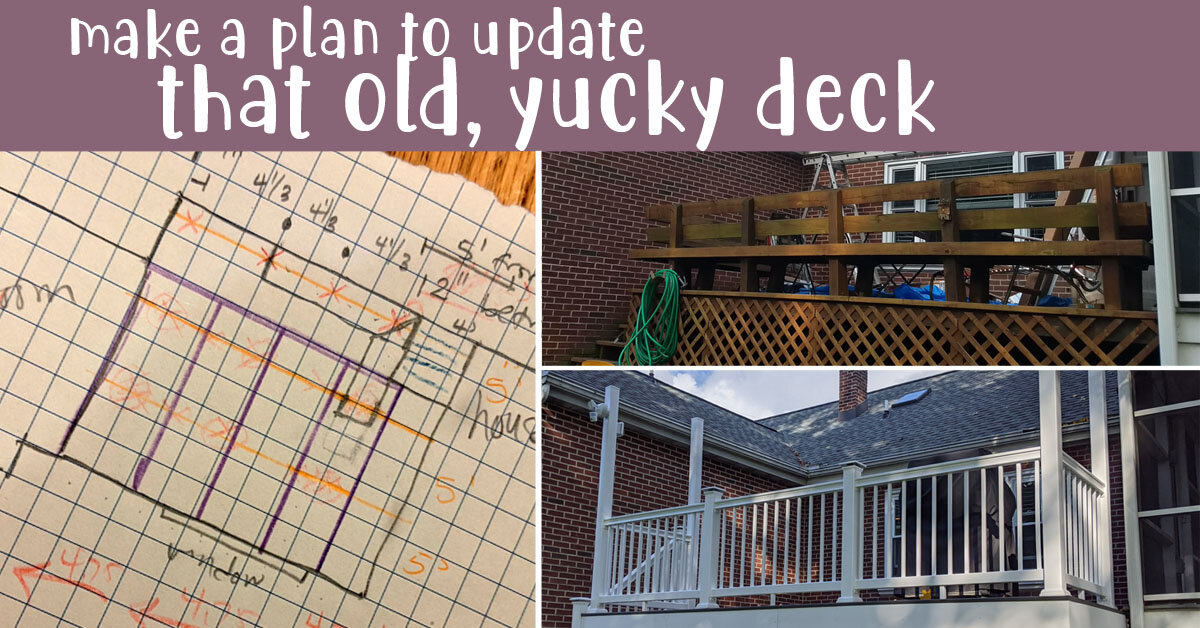
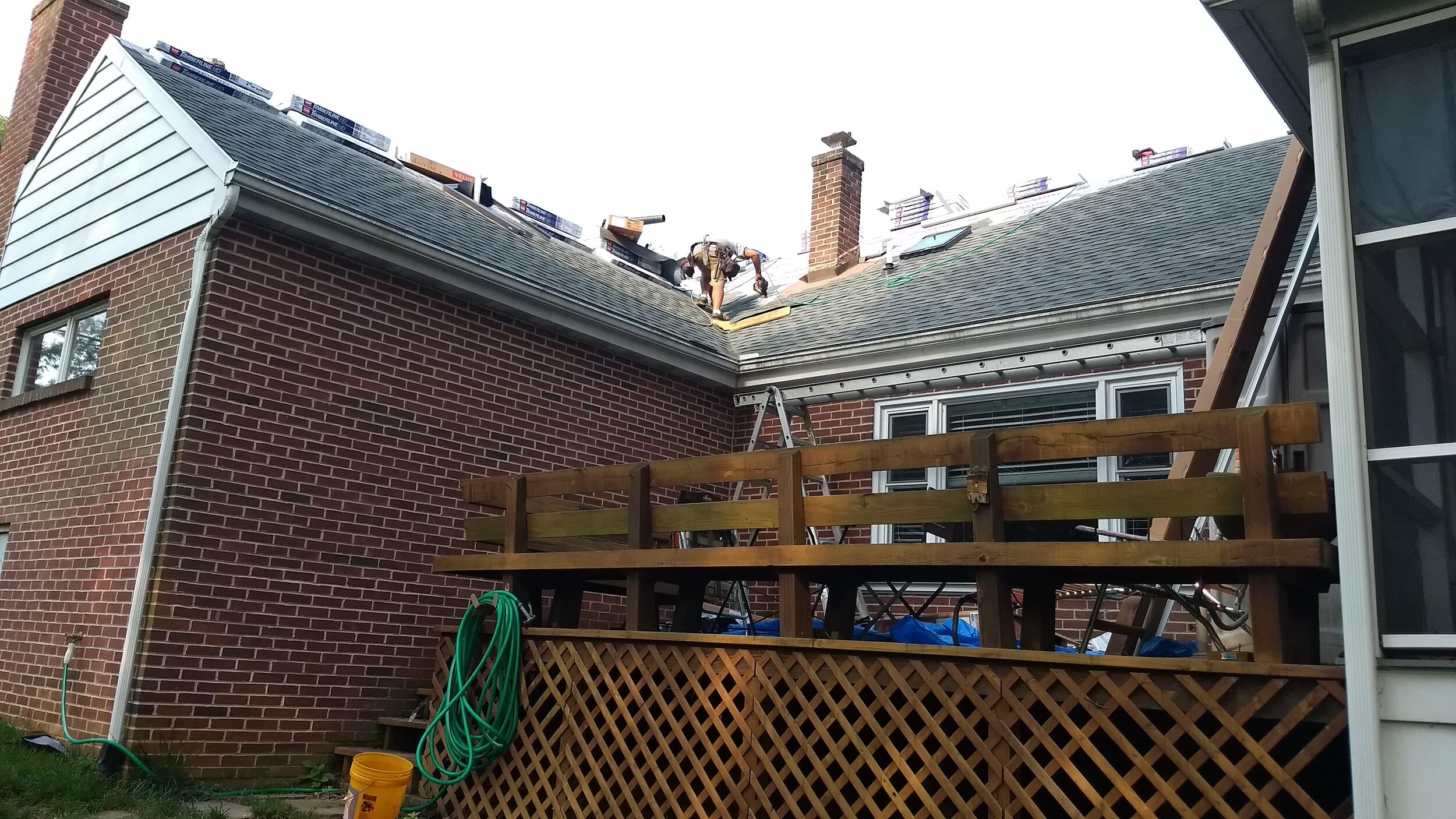
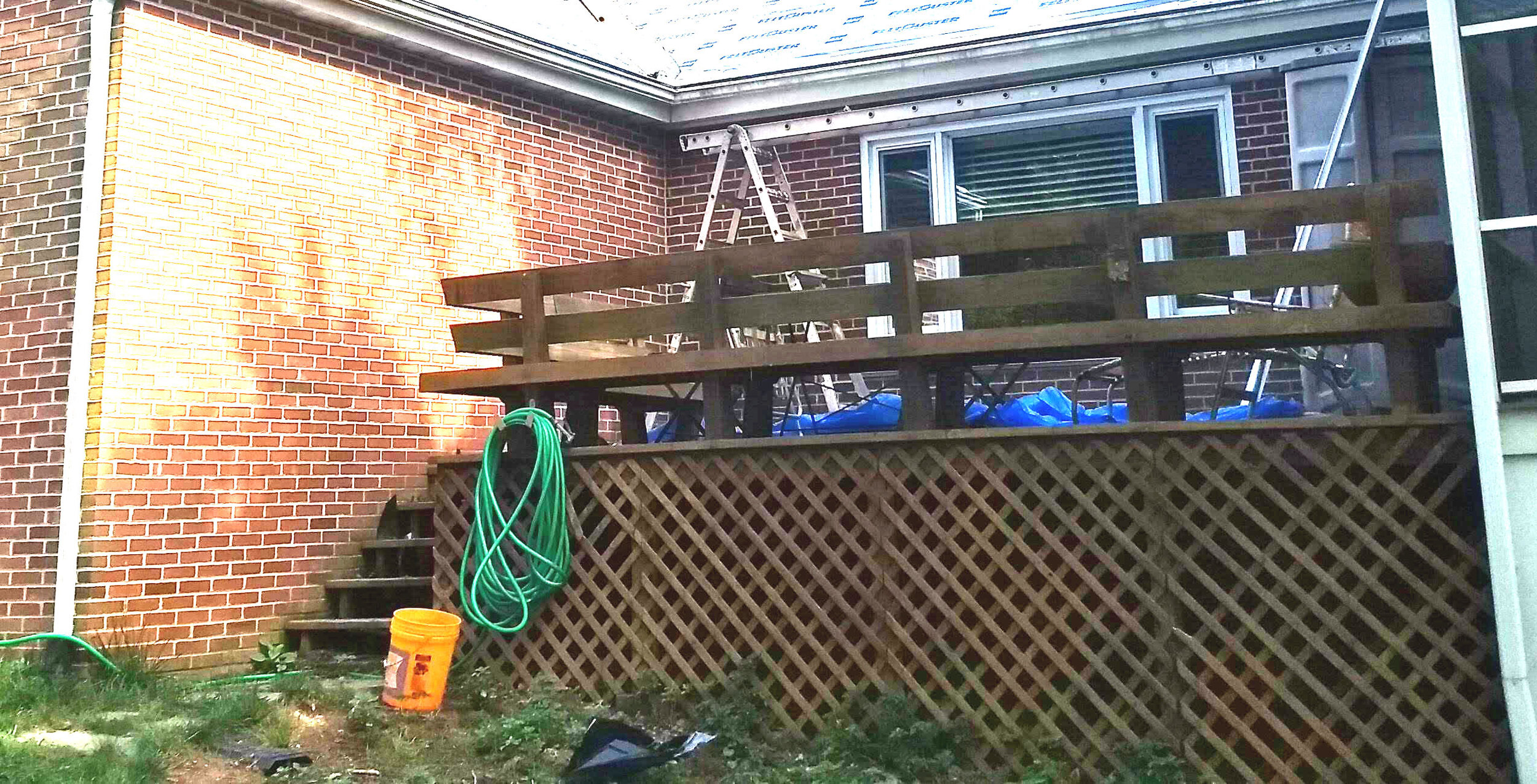
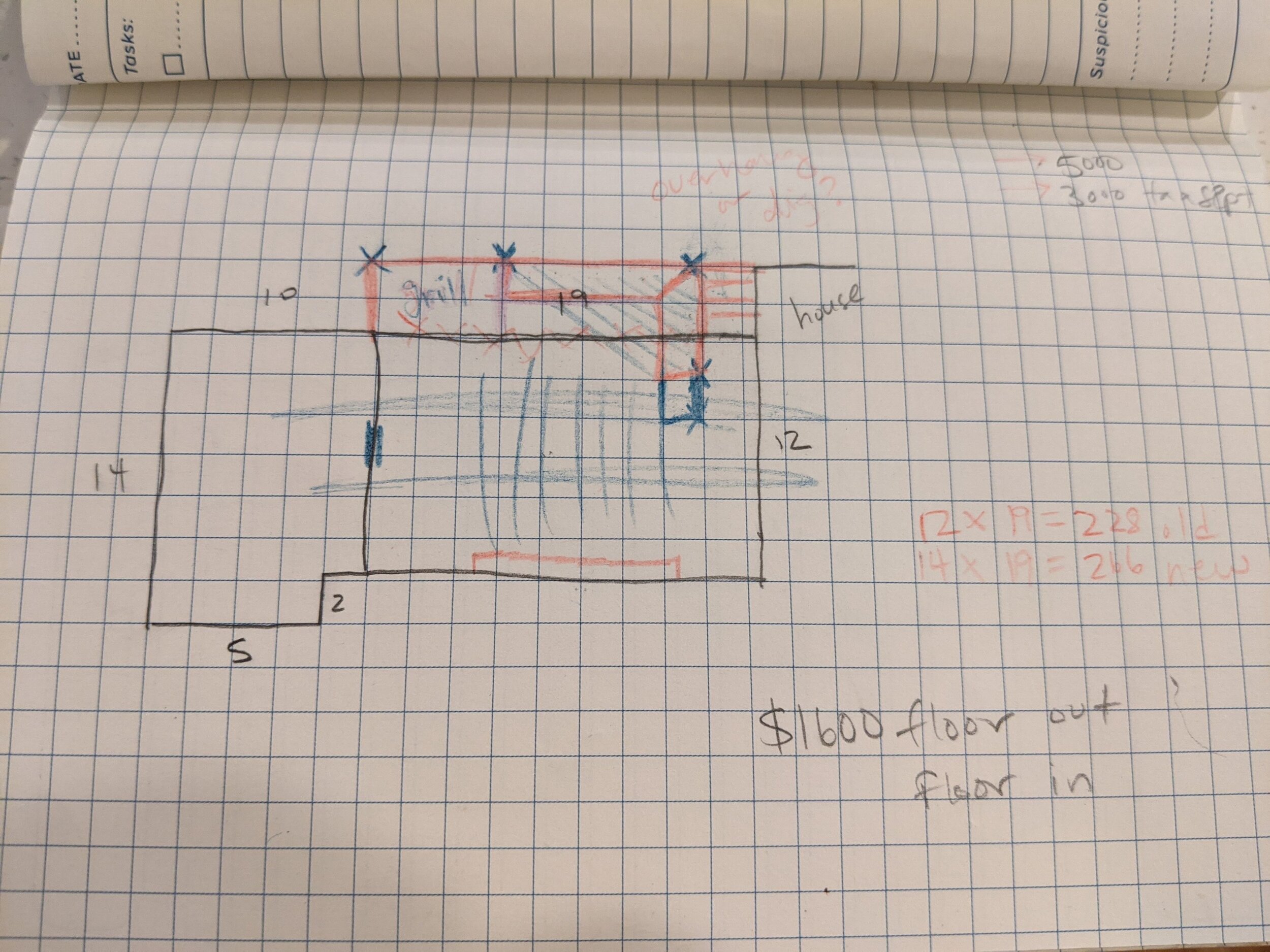
Our deck was old and prone to giving splinters. A few of the boards were going bad. There was a built-in bench around the whole front side and corner, which meant there was no place to put the grill without block a bench. The lattice was breaking. And once we got underneath, we found out it was borderline dangerous as many of the supports weren’t properly attached. (Oye.)

These pictures are from when we redid our roof a few years ago because I NEVER remember to take ‘before’ pictures.

WHY WE STARTED

We had a large family event coming up, and I suggested Hubs should replace “either that board or the whole deck.”

Don’t think I didn’t know which one he’d choose!

WHERE WE ARE NOW

I don’t blog as we go because I want to make sure if we mess something up, we have the benefit of hindsight to warn you. (You’re welcome.)

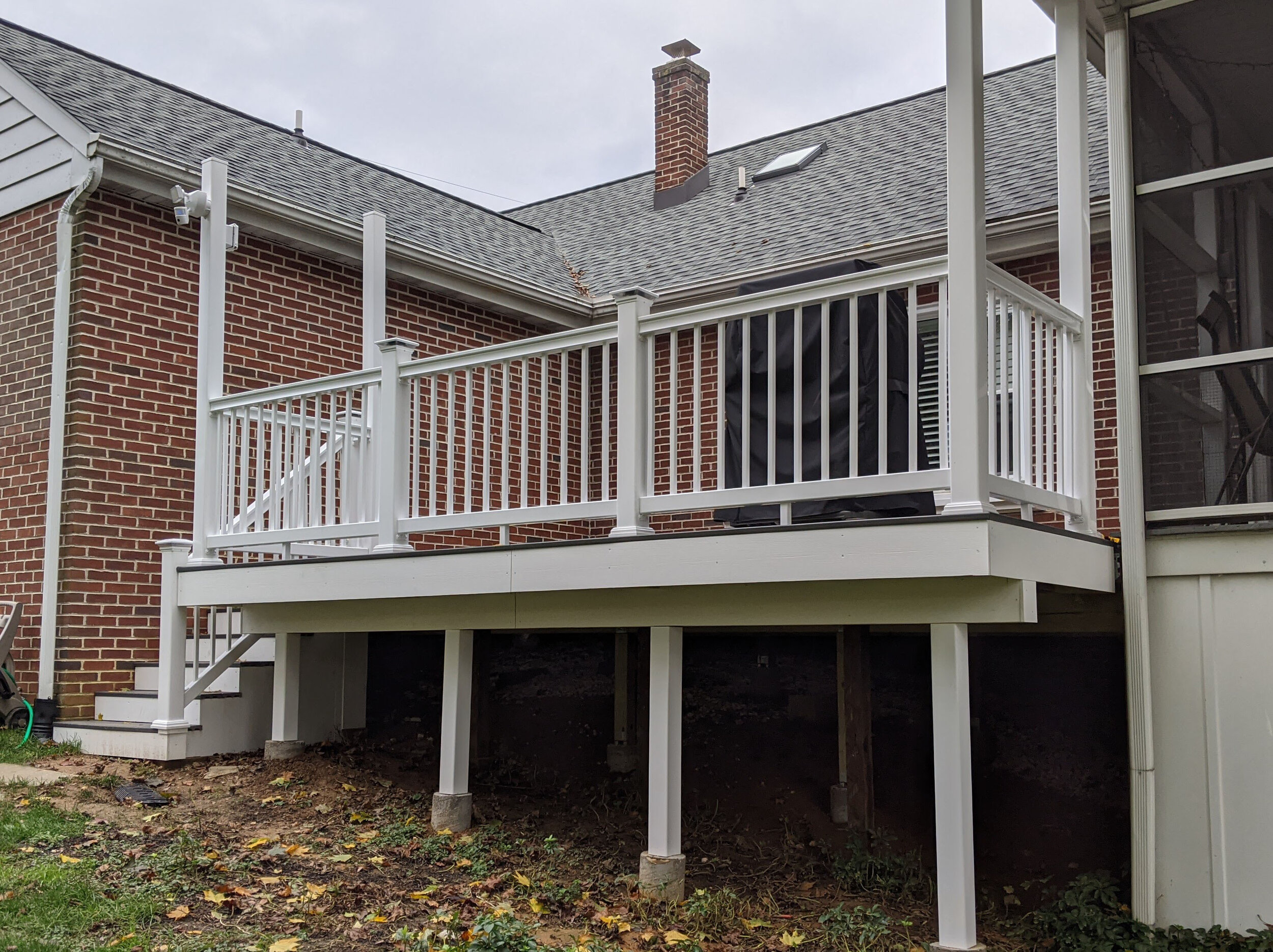
So NOW, we have a new deck… and Hubs has built it with plans for a Phase 2 pergola. But first — it’s going to be cold in PA soon, which probably means I get my next bathroom done. (YAY!)

For now, the deck was fantastically useable for our family event (celebrating my daughter’s baptism). We’ve also been grilling and playing on it. Mostly just walking on it in bare feet without getting splinters—that’s already a huge improvement.

Here’s an overview of our process, and as I blog each step over the weeks ahead, you’ll get to see how everything came together! We had so much help from my father, my father in law, and good friends. Thank you all!

THE PLAN TO UPDATE THAT OLD, YUCKY DECK

  1. Make a killer, to-scale, color-coded plan that impresses the guy at Home Depot

  2. Demolition (obviously) and Deck Support Footers (auger digging, concrete, connection hardware)

  3. Expansion of Old Frame (in our case, we could keep some of the skeleton) and Grading/Adding Stones to the Ground beneath

  4. Trusses and Supports (the pieces that go end-to-end, and the shorter pieces that go across to keep things from twisting)

  5. Stairs (if you don’t know what stairs are, you need more than this blog.)

  6. Pillars (the vertical pieces that you can lean on without falling off the deck)

  7. Deck Boards (the stuff you walk on and its invisible connectors)

  8. Electrical (to hang lights and a new security camera)

  9. Railings (what attaches to the pillars)

  10. Stair Fascia and Rail (because this is a little different than the other stuff since it’s all at angles) plus Fascia (the non-weight-bearing decorative covers for ugly things to add the finishing touches)

    Future Phase 2: Pergola Top (because Hubs says there’s too much light coming in our living room window)


Our first step was to make the plan, so click next to keep reading…
 
make-a-plan-to-update-old-deck.jpg
 

Click Here to View the Full Blog Archive.      


mixed metallics for your fall kitchen

mixed-metallics-for-fall-kitchen-vert.jpg

Gold and silver never used to be friends. Now they’re in a club singing songs and holding hands with bronze, platinum, copper, rose gold, and anything else that shimmers and shines. Mixed metallics are soooo pretty for a fall kitchen. Can’t get enough time staring at this pretty cabinet!

This set up is my perfect fall combination — Gold Rose by Sango , delicate etched glasses from Susquehanna Glass that belonged to my grandmother, and Franconia’s Silver Thistle that was my mother’s. Very shortly, my wintery Christmas decor will come out, adding overtones of copper to the mix. Can’t wait!

I knew I wanted my china cabinet to show off the dishes that had the most meaning for me. This Gold Rose set belonged to my beloved aunt (she is very much alive and well, just downsized some of her dishes when she moved). The glasses were my grandmother’s, and the Silver Thistle was my mother’s. When she inherited several sets from both her mother and mother-in-law, my sisters and I were each given the choice of a set. Amazingly, we each wanted different ones — so we all got our first choice! How’s that for family dynamics.

I am hugely blessed to have this wonderful and beautiful memento of women who love me.


Click Here to View the Full Blog Archive.      


rocking halloween costumes for a family on the cheap

My kids love dressing up each year. We’ve had a grand time picking what we’re going to be — but I’m not dropping $400 on costumes just because there’s 5 of us. Here are some great costumes we’ve done and the ways I made it work inexpensively.

halloweek-family-cheap.jpg

PIRATE

This little pirate was simple but fun! Black pants he already owned, paired with a black shirt he already owned. I walked into a thrift store and searched quickly for something black and white stiped in the shirt section — easy to find! Then I grabbed a red t-shirt to slice off sleeves for the tie accents. I cut the v-neck and small slits to lace the neck. For the hat and eye patch, I used single pieces of $1 felt from WalMart. The eye patch needed elastic, and I cut the skull & crossbones out of another sheet of felt.

TOTAL SPENT

B/W shirt - $2 thrift

T shirt - $1 thrift

Felt - $3 (2 black, 1 white)

Elastic - had this, you could also use a slice of t-shirt

IMG_20759413493124.jpg
 
justice league.jpg
antiope.jpg

I LOVED MY COSTUME. My tiara was also a cut-up milk carton that I attached sticky foam to. My dress was a $2 thrift find accented by gold leather from a $1 thrift store handbag plus a $1 leather belt.

(Unrelated — my husband was Snake Plisskon.)

JUSTICE LEAGUE

Superheroes are really popular costumes which means they are EXPENSIVE. Ugh. And the worst part is, the garment is total crap. Nasty, itchy and see-through for $29.99. I hate that. Plus, Halloween (here at least) is cold and my kids get stuck wearing it over a sweatshirt! My solution was $10 sweatsuits from WalMart that we converted.

Batman was a solid black sweatsuit with a $1 Dollar Tree mask that I cut out $1 sheets of felt for the logo.

Cyborg was a grey sweatsuit with $1 sheets of felt glued in place for the shapes. The arm cannon was a cut up, taped, and spray painted Amazon box. The mask, believe it or not, is the bottom of a milk carton, sliced in half diagonally, and spray painted! It gave the perfect too-square appearance to the robot side of his face.

Superman I used $1 sheets of felt and use the leftover red to add accents to a robe I found at a thrift store.

TOTAL SPENT

They wore the sweat shirts and sweat pants afterwards as clothes, so not sure that counts as a costume. But still…

Robe $2

Sweatsuits - $10 each

Felt - grey, black, yellow, red, blue, grey, black $7

Mask - $1

Already had the spray paint

Milk carton

Now, my nephew (not pictured) was the Flash, and my niece was Wonder Woman. To round out the crew my sister (Wonder Woman’s mom) was Hippolyta and I was Antiope (Robin Wright’s character from the movie, Wonder Woman’s aunt.)

You’ll see Snake Plisskon reused the pirate’s eye patch…

TOTAL SPENT

Belt $1

Dress $2

Handbag $1

Sticky foam $3

Milk carton


OLD MEN

This was a hilarious and easy idea. The wig was a big splurge for me - $10. White spray-in hair dye would have been cheaper but he had a buzz cut at the time. It came with the moustache so we split it between the two kids — count it as $5 each.

We borrowed the cane, built the walker from PVC pipes and corners I got at Home Depot for $6, and picked the clothes and glasses at a thrift store.

The PVC turned out to be really fun. I cut it into pieces and used various ends to make the shape. They were so cheap! Although I got some weird looks in the plumbing section…

TOTAL SPENT

Vest $1

Suspenders $1

Socks $1

Pants $1

Walker from PVC $6

Hat $1

We already had the bow tie and I drew wrinkles on with brown eye pencil

IMG_20181031_175750010.jpg
IMG_20181031_175824874.jpg
 

Lion

Look at this handsome lion. What a good boy. I bought this, as I also bought my rainbow wig, but they get used year after year. The law of averages, you know… the more we wear them, the cheaper they become!


BACK TO THE FUTURE

Doc Brown was another $10 WalMart sweatsuit — this time in white. The accents were a sheet of $1 felt. We used work goggles we already had and repurosed last year’s old man wig. The giant remote control was a dowel rod (89 cents from WalMart) and a small spray painted Amazon box.

Marty McFly was layers of collared shirts (thank you, 1985) and red puffer vest I already owned. All we needed was a skateboard and he was instantly recognizable with his partner.

The Flux Capacitor was too little to eat candy, so we just used puffy paint on a plain white onesie we already had that ** might ** have had some unmentionable stains up the back…

TOTAL SPENT

White sweatsuit $10

Red Felt $1

Dowel rod $1

Skateboard (which they now use ALL the time) $20

Puffy paint $3

IMG_20191101_175459.jpg
IMG_20191101_175414.jpg
 
 
halloweek-family-cheap-ho.jpg
 

Click Here to View the Full Blog Archive.