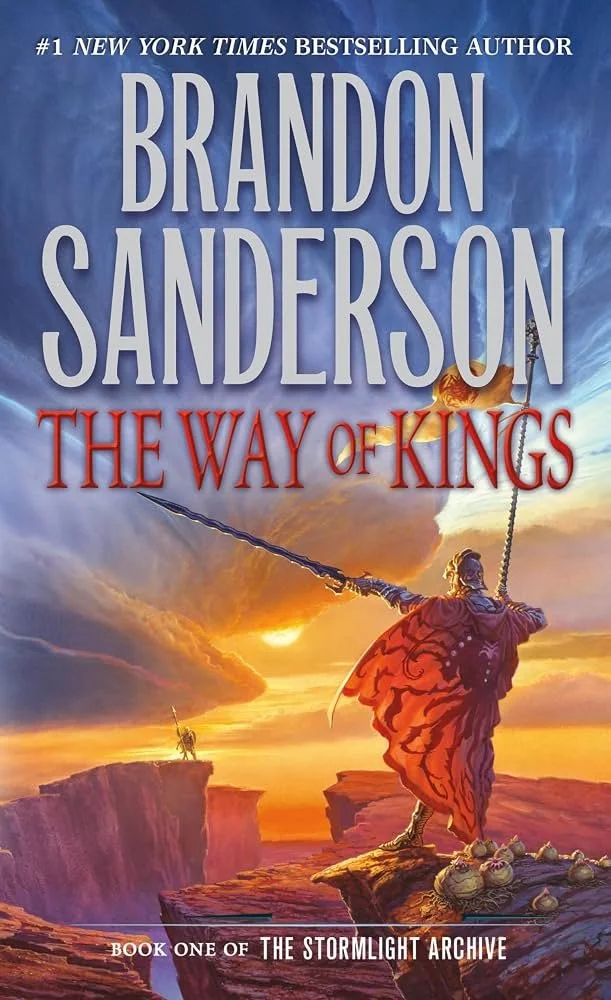
The Way of Kings by Brandon Sanderson (Stormlight Archive 1)

I went into The Way of Kings expecting something similar to Mistborn, just longer. I quickly discovered that this is a very different kind of book.

In fact, for the first 150 pages or so, I mostly read *words* with no sense of meaning. What is happening here? There are multiple prologues, an enormous amount of world-building, unfamiliar terminology and a seemingly endless number of characters and places to keep track of. I started to feel ready to ask, “When does the book start?”

Eventually, though, the pieces began to come together, and I started to appreciate what we were doing even if I didn’t know where we were going.

I had an interesting experience discussing the book with my 16-year-old son and his friends, all of whom are huge fans of the series. I casually mentioned that Kaladin wasn't my favorite character, and you would have thought I had insulted their cross country team. I DO understand why they love him (as teen guys), but I find him somewhat self-focused and, at times, a little too consumed by his own suffering. As a parent, I found myself much more drawn to Dalinar, whose sense of responsibility and concern for the people around him resonated with me more. Plus, bless his heart, he is the chaos commander which is what moms feel like all the time.

Adolin also grew on me. I wanted to dislike him, truly, I did, but his charm is irritatingly undeniable. What horrible taste we all have. Shallan is another complicated character—self-focused and often short-sighted, although she becomes more interesting as the story progresses. I enjoy the descriptions of her subconscious art.

This book requires patience, but the world Sanderson creates is impressive. By the end, I was invested enough to understand why my son and his friends were so passionate about the series.

This is a great start to something big.


Click Here to View the Full Blog Archive.      


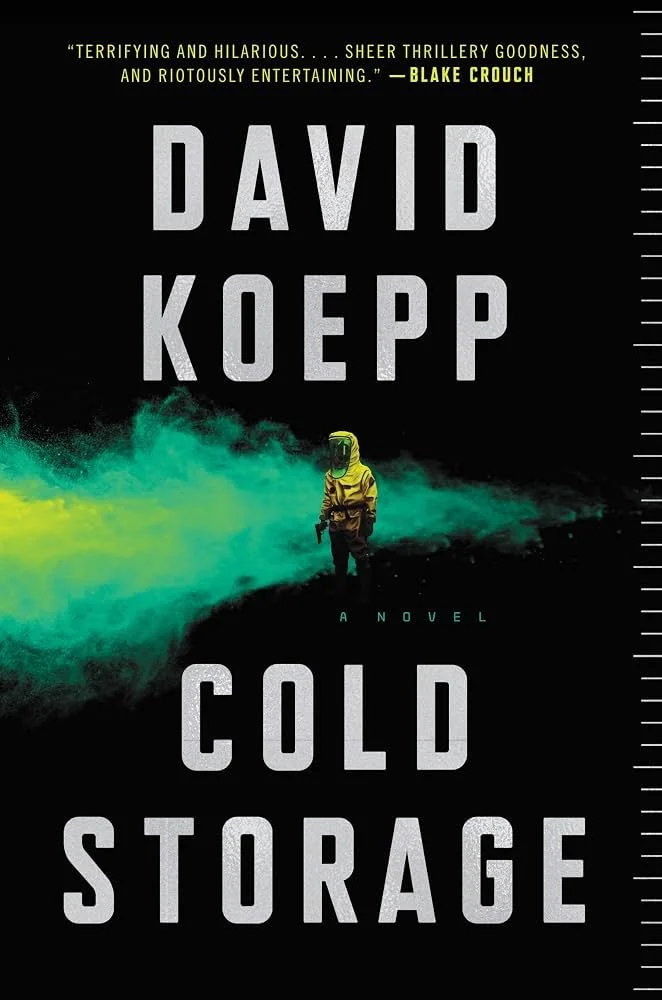
Cold Storage by David Koepp

David Koepp is best known as the screenwriter behind Jurassic Park, and I think that background is particularly evident in Cold Storage. This book moves. It has the pacing of a movie, with one increasingly intense scene leading directly into the next.

I am not usually drawn to zombie books, so I wasn't sure what I was getting into with this one when a friend recommended it. The premise involves a dangerous **thing** that has been kept in cold storage for years and, once released, begins doing what dangerous **things** apparently do best: multiplying and causing chaos.

It is also very gross. There is a lot of biological detail, and “squishy” is probably the best word I can come up with to describe some of it. But somehow, all of that is entertaining rather than disturbing.

I particularly enjoyed the characters. They are unusual and memorable, and there is enough humor woven throughout the story to keep it from becoming relentlessly dark.

The pacing is probably the biggest strength. Nearly half the book takes place during the final 38 minutes of the story (yes, there’s a bomb countdown involved). The tension just keeps building, and the result is an extremely fast and intense finish.

Cold Storage was different, clever, gross-but-funny and very quick to read.


Click Here to View the Full Blog Archive.      


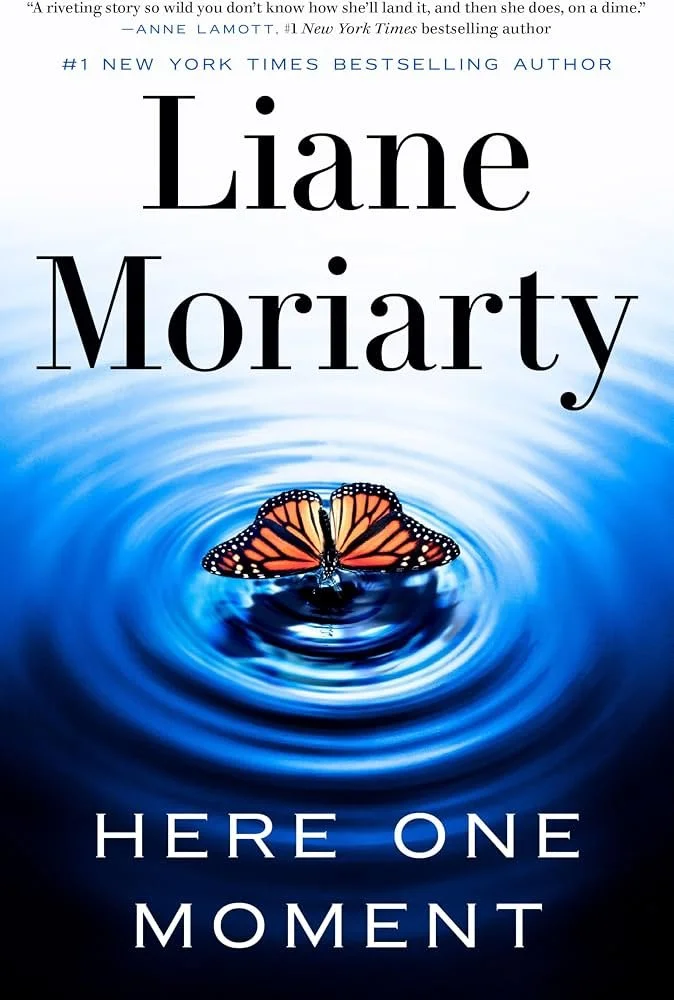
Here One Moment by Liane Moriarty

I absolutely loved Here One Moment! I recommended it right away to several other people.

The premise is unusual, and I don't think I've read another book quite like it: can this woman tell the future, or not? A seemingly ordinary situation on a plane takes an unexpected turn, and from there, the story keeps raising questions about fate, choice, relationships and the stories we tell ourselves about our own lives.

What I enjoyed most was how often the book surprised me. I had so many questions as I was reading, and there were plenty of moments when I thought, “There is no way that is where this is going.” Just when I thought I understood what was happening, another piece of the story changed my perspective.

The characters are wonderful. I found myself genuinely invested in Cherry, Leo, Paula, and Ethan and rooting for things to work out. The relationships felt believable, which made the emotional moments much more powerful. Moriarty also does something I particularly appreciate: she allows humor and sadness to exist together. There are some genuinely funny moments alongside some very deep and emotional ones.

And then there is the ending!! YES. The threads of the story come together in a way that feels earned rather than forced, and her epilogue… (chef’s kiss) that is exactly the right kind of sweet and satisfying.


Click Here to View the Full Blog Archive.      


Gone Girl by Gillian Flynn

I am very late to Gone Girl. I knew the general reputation of the book and was familiar with the idea that it contained a major twist, but I had never actually read it.

I enjoyed the mystery and suspense. The book exists on controlling what the reader knows and when we know it. The shifting perspectives and gradual revelations kept me interested and made me continually reconsider what I thought was happening.

My biggest problem with the book, though, is that I disliked … everyone in it.

There is usually someone in a mystery or thriller that I find myself rooting for. Maybe it is the person trying to solve the crime, the innocent spouse, or simply the character who seems to be making reasonable decisions while everyone else is behaving badly.

That person does not really exist here.

Instead, I spent much of the book thinking about how awful these people are. They are manipulative, selfish, dishonest and generally unpleasant. Even when I was interested in what was happening to them, I wasn't necessarily hoping things would work out for them.

The twist is effective, even if some of the impact is lessened when you already know the book is famous for having one. Still, I appreciated how the story was constructed and how as the reader, my assumptions were questioned.

I think a book can be a good read even when you would prefer never to meet any of its characters in real life.


Click Here to View the Full Blog Archive.      


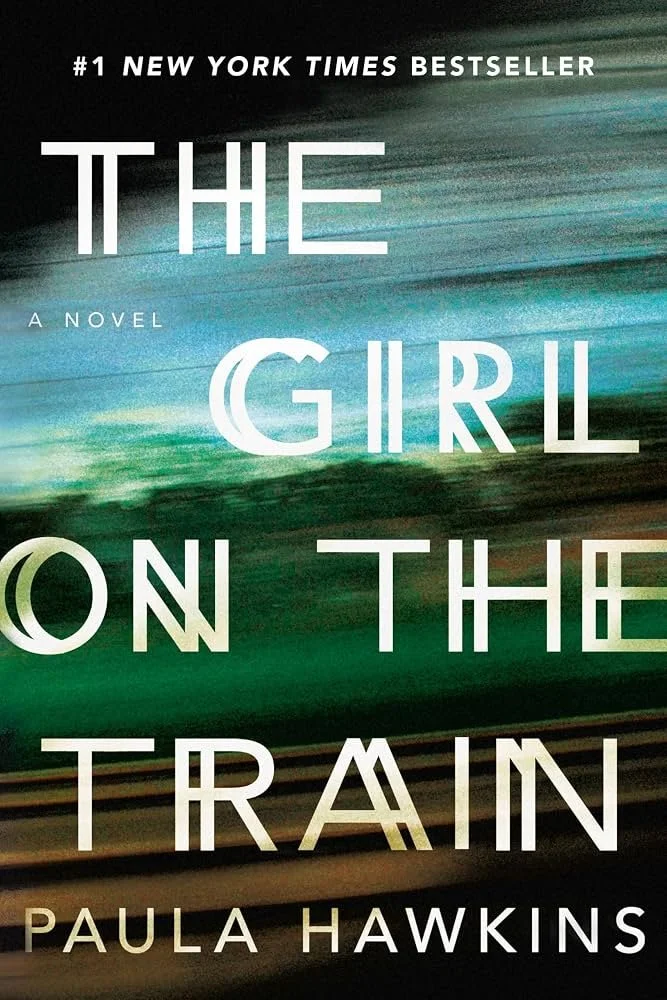
The Girl on the Train by Paula Hawkins

The Girl on the Train is an interesting mystery that keeps you questioning what you know and paying attention to details that might turn out to be important later.

One of the things I liked most was how the experience of reading the book mirrored the experience of the main character. She is constantly observing people and trying to piece together what she sees. Because she is looking for clues, I found myself doing the same thing.

I would read a scene and wonder whether a particular detail mattered. Was that conversation significant? Did I misunderstand what happened? Was the character remembering something accurately? I found myself looking for clues almost automatically, which made the reading experience more engaging.

The story also does a good job exploring the difference between what we see and what we imagine. The main character fills in gaps in other people's lives based on what she observes, creating stories about people she doesn't actually know. As the reader, we are doing something similar—we are constructing our own version of events based on incomplete information.

(Apparently, I have been on a bit of a streak of reading books populated by people I would have no interest in knowing personally.)

The twists kept me interested, though, and I enjoyed trying to figure out what was actually happening. The book creates enough uncertainty that you can't completely settle into one explanation for very long.

Overall, it was a fascinating story about perception, memory, imagination and the assumptions we make about other people's lives. I liked the way it kept me thinking and looking for clues right alongside the main character.


Click Here to View the Full Blog Archive.      


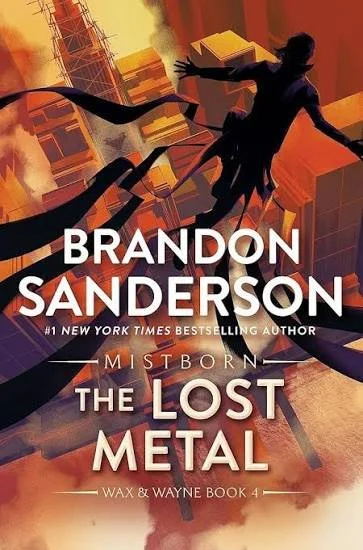
The Lost Metal by Brandon Sanderson (Mistborn 7)

The Lost Metal introduces the larger Cosmere connections. The Ghostbloods are particularly notable, especially if you've read (or will read) The Stormlight Archive.

This story had a positive emphasis on different kinds of abilities and the idea that value doesn't always come from being the most powerful person in the room. That is a theme I appreciate in fantasy, particularly when some characters are otherwise surrounded by people with extraordinary abilities.

There were some sad moments in this book, and I thought the ending handled them reasonably well. I was particularly pleased to see Steris find a role in which her particular strengths were genuinely appreciated. She has always been kind of a pitiable character, and I liked that her intelligence and organizational abilities were treated as meaningful rather than simply quirky personality traits.

And then there is Sazed. It was nice to see him again, but I am ready for something new.

And that something new will turn out to be The Stormlight Archive.


Click Here to View the Full Blog Archive.